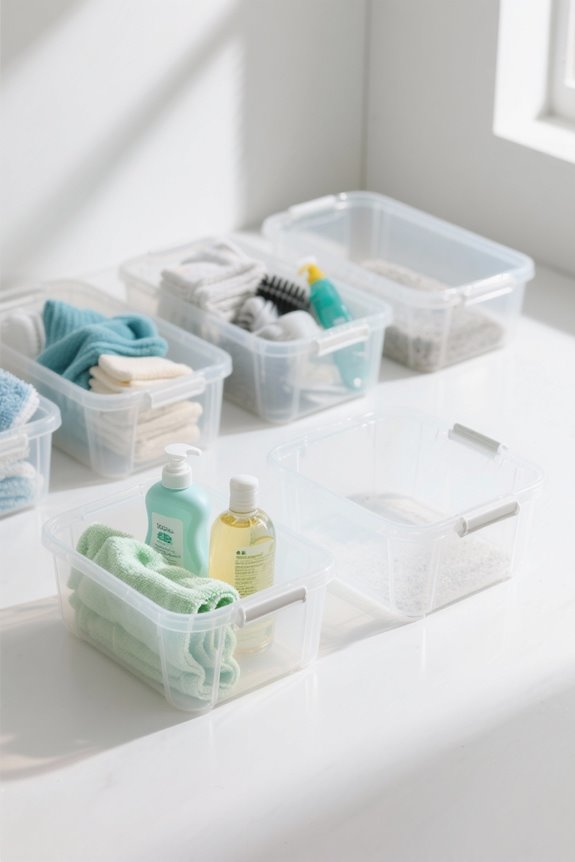
As an Amazon Associate, we earn from qualifying purchases. Some links on this site are affiliate links at no extra cost to you. Our recommendations are based on thorough research and editorial judgment.

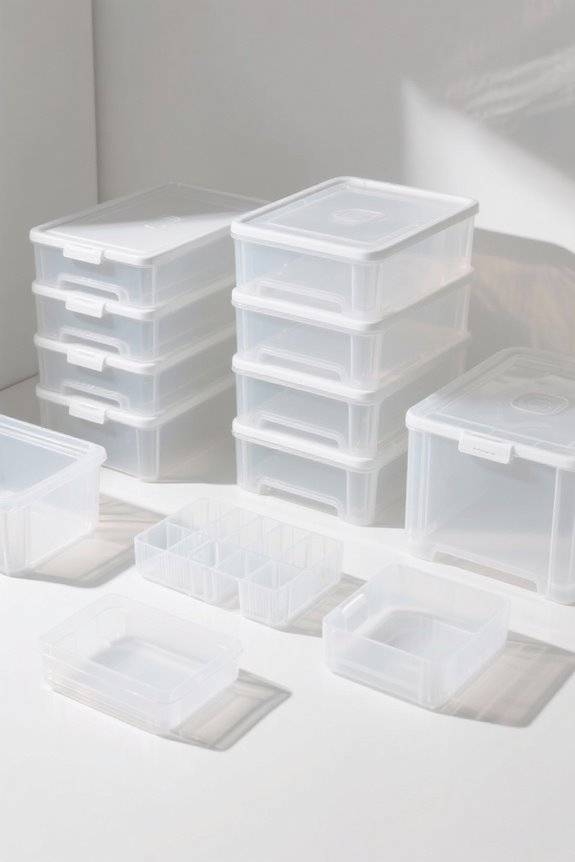
How To Choose The Right Size Storage Bins?

Choosing the right size storage bins is all about understanding our needs and the items we have to store. First, we should assess item frequency and dimensions. Remember, small bins are great for jewelry, while larger ones accommodate bulky gear. Don’t forget about bin shapes! Rectangular ones stack easily, saving space. Plus, we might want to plan for extra room in case new items come our way. Keep going, and we’ll explore even more helpful tips!
Key Takeaways
- Assess the frequency of items to determine whether they need easy accessibility or can be stored out of reach.
- Measure the dimensions of your items to ensure bins fit properly, considering length, width, and height.
- Choose bin sizes based on the type of items; small bins suit tools and jewelry, while large bins fit bulky items.
- Select bin shapes that maximize vertical space, such as rectangular bins, while avoiding round bins that may tip over.
- Opt for clear or labeled bins for easy visibility and identification, enhancing organization and accessibility.
Understanding Your Storage Needs
When we think about storage, it’s easy to get overwhelmed. We’ve all been there, right? To tackle our storage needs effectively, we should first assess item frequency. Some items we use daily, while others we only grab a couple of times a year. This helps us determine which items need more accessible spots.
Next, let’s consider our lifestyle factors. Do we have hobbies that require supplies, or seasonal gear that needs to be tucked away? We should create an inventory to group items by type and size, ensuring everything fits our available space. Additionally, understanding size and capacity considerations is essential for maximizing storage efficiency.
Different Sizes of Storage Bins
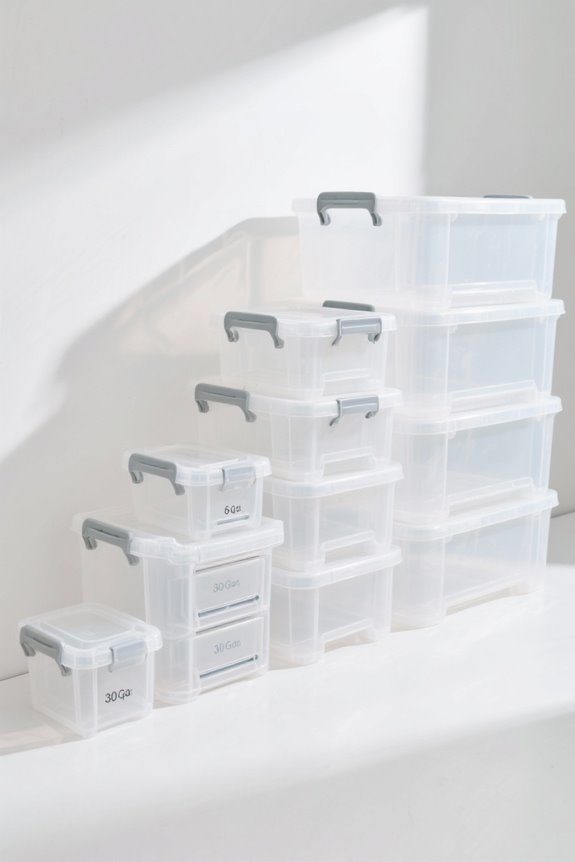
Finding the perfect storage bin can feel like searching for a needle in a haystack, especially with so many options available. Let’s break down the sizes.
- Small bins typically range from 3 x 2 inches to about 12 x 8 inches. They’re great for items like jewelry or tools. Small bin comparisons show they offer excellent organization for tiny parts!
- Medium bins fall between 12 x 12 inches to 18 x 14 inches. They’re versatile and perfect for clothing or kitchen gadgets.
- Large bins range from 18 x 18 inches up to a whopping 27 gallons! Large bin usage is ideal for bulky items like bedding or sports gear. Additionally, various organizers can aid in maximizing space efficiency when organizing larger items.
When we match the size to our needs, organization becomes a snap!
Assessing Item Dimensions

Accurate measurements are essential for finding the right storage bins for our items. We should grab measuring tools like a ruler or tape measure to get precise dimensions. First, we’ll measure the longest side and label it as “length,” the next as “width,” and the vertical side as “height.” For oddly shaped items, like that globe we all love, measure at multiple points and use the largest dimensions for each axis.
It’s also key to take into account protrusions or handles — yes, those cute little knobs matter! Don’t forget to note dimensions consistently — inches or centimeters, pick one! This way, we guarantee dimensions accuracy in choosing bins that fit our miscellaneous treasures perfectly. Additionally, considering storage capacity will ensure that the bins you select can accommodate multiple items without overcrowding.
Planning for Extra Space

Planning for extra space in our storage bins is a smart move, especially if we want to avoid the chaos of overcrowded containers. By allocating just 10–15% more volume in our bins, we can easily accommodate unexpected items or seasonal decorations. This extra space supports better organization, allowing us to group similar items together and keep fragile items separate from sturdier ones.
Plus, with air circulation within our bins, we can reduce the chances of mold or mildew. It’s also beneficial for future storage needs; as our collections grow, we won’t need to rush out to buy more bins. Remember, space planning isn’t just about fitting items—it’s about optimizing our storage for ease and efficiency! Additionally, considering size and capacity for your storage bins is essential to ensure they meet your specific storage needs.
Evaluating Bin Shapes

After we’ve set aside some extra space in our storage bins, it’s time to think about their shapes. Choosing the right bin shapes can lead to excellent configurations for our storage needs.
- Rectangular bins provide great vertical stacking and help save space.
- Square bins offer symmetry but might waste space if not used wisely.
- Cylindrical and round bins are fun but tend to roll or tip over—definitely not suitable for stacking!
When organizing our contents, rectangular and square bins allow for handy dividers, while deep bins are great for books or clothes. So, let’s consider our items and how we’ll access them. Finding the right shapes can truly enhance our storage game! Additionally, opting for stackable designs can maximize vertical storage and effectively utilize office space.
Material Options for Storage Bins
When we consider the best material options for storage bins, it’s essential to weigh our needs against what each type has to offer.
Plastic Storage Bins are durable and lightweight, perfect for heavy items and providing waterproof seals. However, they can be pricier and aren’t biodegradable. Additionally, high-quality plastics used in these bins ensure longevity and resistance to wear and tear.
Fabric Bins can add a nice decorative touch, with many colors and patterns showcasing their fabric benefits. On the downside, they’re less secure and may not guard against water or pests.
Metal Bins are sturdy and resistant to wear, but their drawbacks include being heavy and typically more costly. They fit well for industrial use, but might not be practical for a home.
Choosing the right material really comes down to our unique storage needs!
Durability Considerations
Choosing the right storage bin isn’t just about style; durability plays an essential role too. We need to assess durability comparisons carefully. Heavy-duty resin bins offer remarkable wear resistance, while metal containers support hefty weights but can rust. If we’re storing items outdoors, weather-resistant features are important—think waterproof seals!
When it comes to longevity factors, selecting bins that resist moisture and UV degradation is significant. Look for reinforced construction, which helps prevent deformation under these heavy loads. Also, let’s not forget the ergonomic designs, like handles or wheels, making transportation much easier. Additionally, high-impact plastic bins provide enhanced durability and can withstand harsh conditions, making them a wise choice for long-term storage solutions.
Stacking and Arranging Bins
Having durable storage bins is just the start; how we stack and arrange them can really maximize our space. To use effective stacking techniques, let’s choose bins with flat lids and ribbed edges. This guarantees they stay stable, even when we need to stack a few high. Remember to place heavier bins at the bottom for stability—no one wants a toppled tower of bins!
When it comes to our arranging strategies, measuring our available space is key. Let’s position frequently used bins where they’re easily accessible, while less-used ones can go higher up. And don’t forget to leave gaps for ventilation; moisture can sneak in if we’re not careful! Following these tips, we can create an organized, efficient storage system. Additionally, consider using customizable bin arrangements to further enhance your organization and maximize storage efficiency.
Ideal Applications for Storage Bins
Storage bins are incredibly versatile tools that can help us keep our spaces organized, no matter where we are. We can choose from various storage bin types to fit our needs. For instance, in the kitchen, stackable bins are perfect for dry goods, while durable, clear bins work well for toys.
In our garage or attic, heavy-duty bins with moisture resistance are ideal for seasonal decorations. For office spaces, standard file-size bins guarantee our paperwork stays organized and labeled.
Each storage bin features unique qualities tailored to specific environments, enhancing functionality. Airtight seals ensure that food stored in bins remains fresh, making them great for kitchen use. Whether for home, office, or even industrial use, selecting the right storage bins can transform cluttered chaos into a neatly organized haven. Who doesn’t love that?
Utilizing Custom Sized Bins
Sometimes, even the best storage bins just don’t fit our unique needs. That’s where custom bin customization comes into play! These bins can be tailored to our exact dimensions, which boosts storage space optimization and minimizes wasted gaps.
Imagine bins designed for those awkward corners in our storage rooms. We can opt for adjustable dividers and precisely sized compartments to keep everything organized. Plus, custom bins can be stackable or modular, making use of vertical space. This approach mirrors the benefits of customizable systems that allow us to tailor our storage solutions for optimal organization.
If we want to carry more stock without expanding our footprint, custom sizing is the way to go. So, why not explore custom options to maximize our efficiency and cleanliness in storage? It’s time to think creatively about our storage solutions!
Organizing Different Spaces Efficiently
When we think about organizing different spaces efficiently, it’s crucial to take into account how our unique needs can shape our storage solutions. To maximize our space, we should consider what bins fit where. For instance, small bins work wonders in closets or under beds, keeping frequently used items accessible. Larger bins, on the other hand, belong in garages or attics, where accessibility isn’t as critical.
Using clear bins can help us find what we need quickly, while labels guarantee everything’s easy to spot. And let’s not forget, stacking bins can help save space but must be done carefully. By prioritizing both bin accessibility and space maximization, we can create organized spaces that work for us!
Tips for Long-Term Storage Solutions
Finding the right storage solutions can feel overwhelming, but it doesn’t have to be. For long-term storage, we should focus on durability and space optimization. Plastic bins are our best bet since they resist moisture and can be stacked easily. Using clear bins helps us see what’s inside without ever needing to open them.
When packing, let’s remember to clean and dry our items. This prevents mold and odors—no one wants that! Using storage accessories like bubble wrap protects fragile items, while labeling helps us find things quickly.
Also, if we need climate control for sensitive items, it’s worth it. After all, a little preparation goes a long way in ensuring our belongings stay safe and sound!
Frequently Asked Questions
How Do I Determine the Right Bin Size for Specific Items?
To determine the right bin size, we should measure item dimensions carefully, considering their shape and fragility. This guarantees compatibility with our selected storage bins, allowing for safe storage and easy access to our items.
Can I Mix Different Sizes of Bins in One Storage Area?
Like pieces of a puzzle, we can mix different sizes of bins in one storage area! Effective bin organization enhances our storage aesthetics, ensuring everything fits harmoniously while maximizing space and improving accessibility.
What Is the Best Way to Label Storage Bins?
The best way for us to label storage bins is by using durable labeling materials that withstand conditions, ensuring clear text and barcodes for quick identification. Consistency in our labeling approach enhances organization and efficiency overall.
How Can I Clean My Storage Bins Effectively?
To clean our storage bins effectively, we should use appropriate cleaning techniques based on bin materials. We’ll wash plastic bins with warm, soapy water while gently wiping fabric bins to maintain their integrity. Let’s guarantee thorough drying!
Are There Bins Specifically Designed for Certain Seasons or Events?
Yes, there are bins specifically designed for seasonal storage and event organization. We can find options like waterproof bins for outdoor decor or stackable bins for streamlined storage, making our seasonal changes smoother and more efficient.