As an Amazon Associate, we earn from qualifying purchases. Some links on this site are affiliate links at no extra cost to you. Our recommendations are based on thorough research and editorial judgment.

How To Rotate Seasonal Clothing Efficiently?

To rotate seasonal clothing efficiently, we should first assess our wardrobe and categorize items into A, B, and C tiers. Next, let’s schedule rotation dates for spring and fall that align with local weather changes. When it’s time to switch, we can sort clothes by season and activity, ensuring everything is clean and ready. Using clear bins and vacuum-seal bags will keep our items safe. Interested in learning more about effective organization tips?
Key Takeaways
- Schedule seasonal rotations in spring and fall to align with local weather patterns for a smoother transition.
- Categorize clothing into A, B, and C tiers to prioritize what to keep accessible each season.
- Use clear plastic bins and vacuum-seal bags for efficient storage and protection from moisture and pests.
- Mark your calendar with rotation dates to ensure timely organization and maintain consistency year-round.
- Organize clothes by activity (casual vs. formal) and clean them before storage for optimal maintenance.
Assessing Your Current Wardrobe Inventory
Before we plunge into updating our seasonal wardrobe, let’s take a moment to assess what we already own. A wardrobe assessment is our first step to a more organized clothing inventory. Let’s categorize our items into three tiers:
- A Category: These are our go-to favorites we wear regularly.
- B Category: These pieces see moderate use, often forgotten in the back.
- C Category: Seasonal items that we rarely touch—maybe a winter coat or summer shorts. Adding storage containers can significantly help in organizing and rotating seasonal clothing effectively.
Scheduling Seasonal Rotation Dates

Scheduling seasonal wardrobe rotations helps us stay organized and ready for whatever the weather throws our way. We should each set two main rotation dates: one in spring for warmer weather, and another in fall for cooler temperatures. It’s best to time these rotations at the start of each season, closely aligning with local weather patterns and seasonal trends. Marking our calendars for these dates can help us maintain consistency, reducing clutter and chaos.
Let’s treat these rotations like household tasks—think of them as a chore akin to daylight savings time! By designating a specific time to tackle this, we can make the process manageable, ensuring our wardrobe is always ready for the changing seasons. Additionally, using a customizable closet storage system can enhance our organization during these rotations.
Essential Year-Round Wardrobe Items
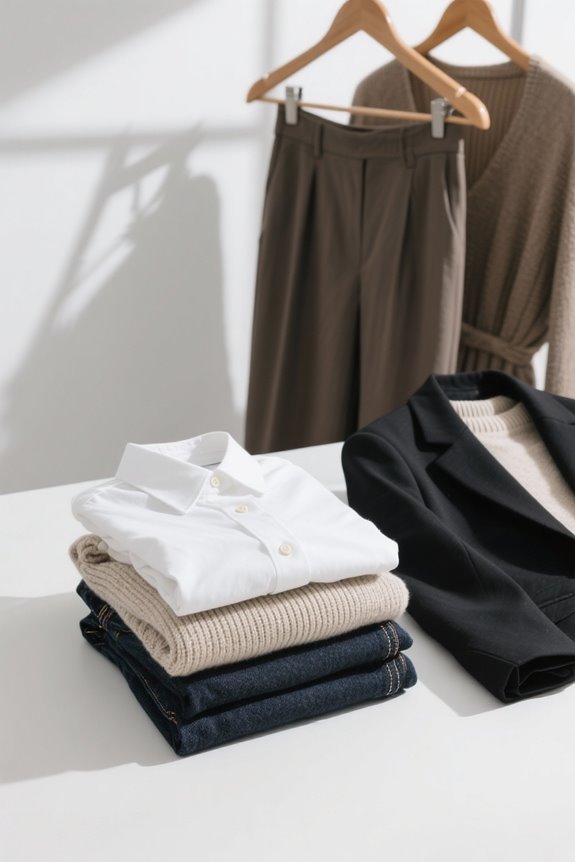
Creating a versatile wardrobe is like building the perfect recipe; it requires the right ingredients! For our essential year-round wardrobe, we should focus on capsule essentials that blend seamlessly across seasons. Let’s include timeless pieces like:
- Denim jackets: Perfect for layering.
- Classic sweaters: Warmth and style in neutral tones.
- Ballet flats: Chic and comfy for any outfit.
- Black leggings: Stylish and versatile for day or night.
Incorporating stylish storage solutions can help keep these essentials organized and easily accessible throughout the year.
Sorting and Preparing Clothes for Storage

Sorting through our seasonal clothing can feel like an intimidating task, but it doesn’t have to be! First, let’s tackle the seasonal grouping by dividing our clothes into categories like winter and summer. We can make this process easier by also sorting them based on activity—such as casual wear versus formal attire.
Before we store anything, we should empty all pockets (no one wants lost treasures) and wash or dry clean our clothes to eliminate odors and stains. It’s wise to set aside any stained items for repair or recycling. A brief time in the sun can help freshen them up too. By taking these steps, we can make clothing categorization efficient and enjoyable for a smoother storage experience! Using durable, non-scratch materials for your storage solutions can also help protect your clothing while in storage.
Utilizing Proper Storage Techniques

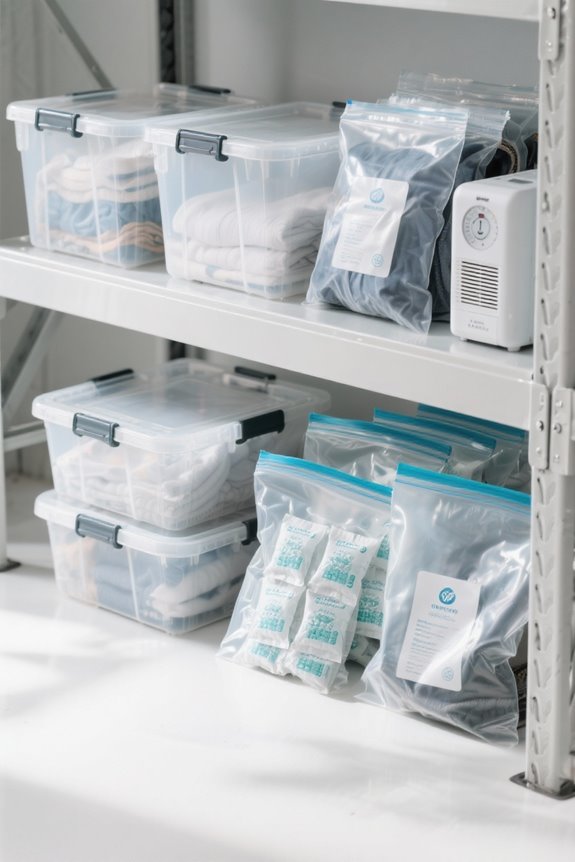
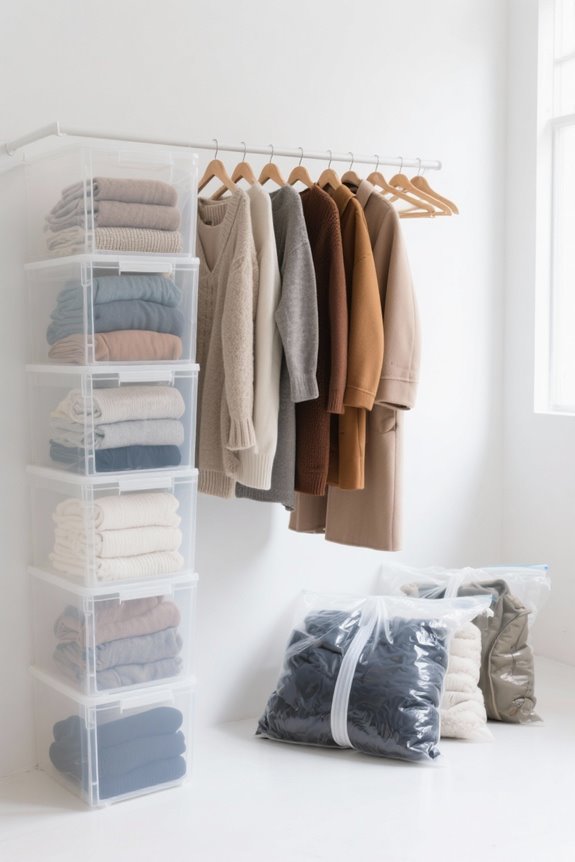
Once we’ve sorted and prepared our seasonal clothing for storage, it’s time to make sure we’re utilizing the right techniques to keep our clothes safe and fresh. For effective seasonal organization, we should use clear plastic bins with secure lids to keep out moisture and pests; plus, they let us easily identify contents.
When it comes to efficient packing, vacuum-seal bags work wonders for bulky winter items, but let’s not overdo it to avoid damaging our fabrics. For delicate pieces, breathable garment bags are our best friends, allowing airflow while preventing mold. Additionally, using waterproof storage bins will provide added protection against moisture and ensure our clothes remain in pristine condition. Finally, remember to find a cool, dry spot for storage. Our clothes will thank us for taking these steps!
Organizing Your Seasonal Wardrobe Space
When we think about organizing our seasonal wardrobe space, it’s essential to keep things simple and accessible. First, we should sort through our clothing, removing items that we haven’t worn in a season or two. This will improve our wardrobe aesthetics and make space for pieces that truly fit our needs.
Next, let’s group items by season and categorize them further, such as workwear, casual, and formal outfits. Using color coordination can also make our wardrobe visually appealing. We can store off-season clothing in labeled bins, keeping our accessible space clutter-free. Additionally, considering expandable closet organizers can help maximize our storage efficiency and keep everything organized.
To wrap it up, we should remember: a well-organized wardrobe can make getting dressed each day a breeze!
Maintenance and Upkeep Through Seasons
Maintaining our seasonal clothing isn’t just a one-time chore; it’s more like the guardian of our wardrobe’s health. To guarantee clothing longevity and prevent issues, we should start with thorough laundering. This helps eliminate stains and pests before storage. For delicate fabrics like silk, dry cleaning is essential to preserve their beauty.
Next, we need to inspect our stored items regularly. This keeps us alert to any emerging damage. Using breathable storage materials, like cotton bags, promotes airflow and prevents moisture buildup. Oh, and don’t forget a natural moth repellent, like cedar! Additionally, utilizing custom closet systems can help optimize space and organization, ensuring that your seasonal clothing is easily accessible and well-maintained.
Finally, keeping our stored clothing in a cool, ventilated area plays a vital role in effective fabric care. Let’s keep our wardrobe happy and healthy!
Benefits of an Efficient Clothing Rotation System
Clutter can sneak up on us, but an efficient clothing rotation system helps keep our wardrobes organized and stress-free. By rotating our seasonal clothing, we not only enhance wardrobe aesthetics but also streamline time management. Imagine waking up to a closet filled only with items that fit the current season!
Some benefits include:
- Increased Accessibility: We can quickly spot what we need without sifting through off-season garments.
- Enhanced Garment Longevity: Storing clothes properly protects them, prolonging their lifespan.
- Less Decision Fatigue: With fewer options, choosing outfits becomes a breeze. Additionally, utilizing eco-friendly storage bins can further optimize your seasonal clothing organization.
Frequently Asked Questions
How Do I Choose What to Donate or Discard During Rotation?
When choosing what to donate or discard, we should follow donation criteria: items need to be clean and intact. For the discard process, let’s remove anything with visible damage or lingering odors.
Can I Mix Seasonal Clothes in My Everyday Wardrobe?
Absolutely, we can mix seasonal clothes! By cleverly coordinating colors and utilizing layering techniques, we create chic combinations, ensuring our wardrobe feels fresh while embracing the best of every season’s style spectrum.
How Often Should I Check on Stored Clothing?
We should check our stored clothing bi-annually, ideally at seasonal wardrobe changes. This storage frequency helps us catch any damage early, ensuring our clothes remain in great condition for when we need them again.
What Do I Do With Damaged Items I Wish to Keep?
We can explore various repair options like patching or darning, preserving the sentimental value of our items. By fixing them creatively, we not only extend their life but also cherish the memories attached to them.
Are There Specific Fabrics That Require Different Storage Methods?
Yes, we understand specific fabrics require different storage methods. Cotton storage benefits from breathable bins, while wool care needs air circulation to avoid moisture. Let’s keep our beloved clothes safe by using proper techniques for each fabric type!