As an Amazon Associate, we earn from qualifying purchases. Some links on this site are affiliate links at no extra cost to you. Our recommendations are based on thorough research and editorial judgment.

How To Store Clothing With Vacuum Seal Bags?

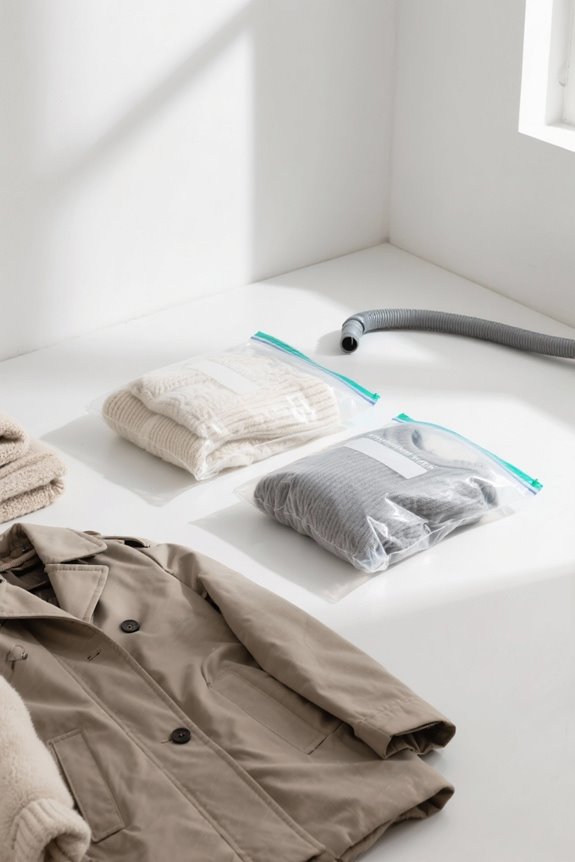
To store clothing with vacuum seal bags, we need to take a few simple steps. First, wash and dry your clothes completely. Next, fold them neatly and place them in the bag, filling it about 75–80% full. Then, use the vacuum hose to remove excess air before sealing it tightly. This method not only saves space but also keeps fabrics protected from dust and moisture. Curious about what types of clothing are best for sealing? Just wait and see!
Key Takeaways
- Wash and dry clothing thoroughly before sealing to prevent odors and mold growth.
- Fold clothes neatly, filling bags to 75-80% capacity for effective sealing.
- Use an appropriate vacuum bag size, arranging heavier items at the bottom.
- Attach the vacuum hose to remove air, ensuring to seal the zipper tightly afterward.
- Label bags clearly for easy identification while periodically checking for any air infiltration.
Benefits of Vacuum Seal Clothing Storage
When it comes to maximizing our storage space, vacuum seal bags are a game-changer. The vacuum benefits are hard to ignore; they compress clothing by up to 80%. Imagine fitting an entire seasonal wardrobe into the same space! This storage efficiency allows us to utilize often overlooked spots like under the bed or behind furniture.
We don’t just save space; we protect our clothes too. The airtight seal blocks dust and moisture, keeping our garments fresh and safe from pests. Plus, reusable vacuum bags mean we’re being eco-friendly. Additionally, using vacuum seal technology helps extend shelf life by minimizing air exposure, which is beneficial for preserving the quality of stored items.
Suitable Clothing Types for Vacuum Sealing
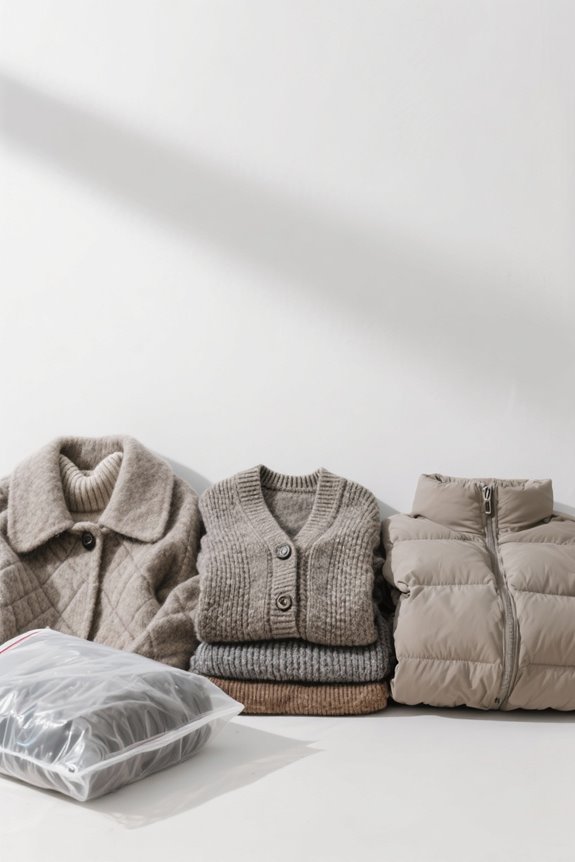
Now that we’ve covered the benefits of vacuum sealing our clothing, it’s time to contemplate what types of garments work best in those handy bags. When it comes to seasonal garments, think about winter coats, sweaters, and scarves. They’re perfect for vacuum sealing because it compresses bulky fabrics, making off-season storage a breeze.
Also, non-delicate casual wear like T-shirts and jeans does just fine because they’re made from durable materials. If we’re dealing with outerwear, those puffer jackets should be completely dry before sealing them up. Additionally, using vacuum storage bags can provide airtight protection against dust and moisture, ensuring your clothes stay fresh during storage.
However, we should avoid vacuum sealing delicate fabrics, leather, or anything with embellishments. Trust us; you don’t want those beads tangled in a bag! So, stick to what works best, and happy sealing!
Recommended Products

Revolutionary Dual Compression Technology: Combines the power of a vacuum seal with a built-in rigid compression board. Unlike traditional vacuum bags that become irregular lumps, the pressure board ensures a flat, uniform surface for maximum space-saving and easy stacking.
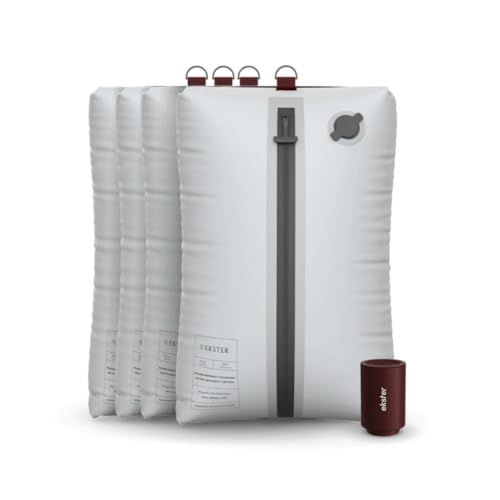
MAXIMUM SPACE EFFICIENCY: Ekster vacuum travel bags transform your packing experience by tripling your capacity and compressing clothing up to 60% smaller with advanced space-saving bags technology. Each compression packing cube holds 15+ items while working seamlessly with any household vacuum or the portable pump, so you never sacrifice your favorite outfits on any trip, whether you’re packing travel airplane essentials or bulky items for extended stays.

VACUUM COMPRESSION STORAGE BOX: Combines the space-saving function of compression storage with the stability of a structured storage box, helping keep bulky clothing and household textiles neatly contained.
Step-by-Step Vacuum Sealing Process
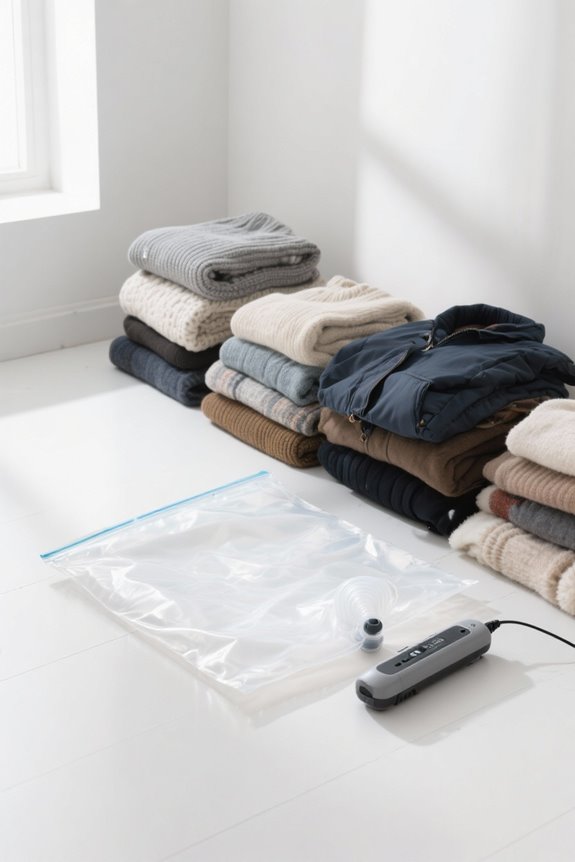
Getting started with the vacuum sealing process can seem a bit challenging, but it’s actually quite simple once you break it down into steps. First, we need to wash and dry all clothing thoroughly. This helps prevent odors and mold. Next, fold the clothes neatly and check for any stains.
Now, let’s choose an appropriate bag size and fill it only 75–80% full. When packing, arrange heavier items at the bottom. As we seal, remember to leave 2 cm clear for a strong closing. A common mistake is overstressing the zipper, so let’s avoid that! Finally, we’ll attach the vacuum hose and remove the air.
Using BPA-free materials ensures that our clothing is stored safely and without harmful chemicals.
Easy, right? Following these vacuum sealing tips guarantees our clothes stay safe and fresh!
Recommended Products
HOSPITAL GRADE: Helps initiate and maintain milk supply with Medela’s patented, research-based 2-Phase Expression Technology, designed to closely mimic a baby’s natural nursing rhythms and proven to express 18% more breast milk when double pumping

LIMERICK'S JOY STANDARD PUMP is a portable hospital performance breast feeding device carefully crafted to simplify and enhance the pumping experience for new mothers. Complete with a digital breast pump, ComfortTouch kit, snap-in bottle holders, and power supply

Includes: 1000, 10 inch by 16 inch pouches per box
Selecting the Right Vacuum Bags

Selecting the right vacuum bags for your clothing can make a big difference in how well they’re stored. First, let’s consider vacuum bag types. We have classic multi-layer bags that resist punctures and leaks, perfect for preserving our clothes. Next up, we should pay attention to durability analysis. High-quality reusable bags maintain their seal after multiple uses, saving us money in the long run.
Let’s think about size too—small bags for socks, medium for shirts, and jumbo for those puffy winter coats. Don’t forget the valve design! Some bags fit well with vacuum cleaners, while others roll up by hand. This blend of features helps guarantee our clothing stays safe and snug, just like we want. Additionally, choosing bags with high suction power can further enhance the effectiveness of the vacuum sealing process, ensuring maximum protection for your garments.
Recommended Products

VACUUM SEAL BAGS FOR CLOTHING TRAVEL WITH ELECTRIC PUMP INCLUDED · Pack 10+ days into any carry-on. USB-C rechargeable, 20 uses per charge. Compress at home, the hotel, or mid-cruise · no vacuum cleaner needed.

【COMPRESS IN SECONDS & Save 80% Space】: These No-Pump Vacuum Storage Bags feature an easy press-to-expel-air design that helps quickly reduce the volume of bulky items. Perfect for clothes storage, bedding storage, blankets, comforters, pillows, and seasonal clothing. Create more room in closets, wardrobes, suitcases, and storage areas without the need for a separate vacuum pump.

【Maximized Luggage Space】Optimize every inch of your luggage! The cube design of these space-saving bags minimizes gaps between items, creating an organized, structured packing experience. At 18.5x11.8x5.9 inches and weighing just 6.3 ounces, these bags fit seamlessly in carry-on luggage or larger backpacks (35L+), leaving you space for other essentials.
Preparing Clothes for Vacuum Sealing

Preparing clothes for vacuum sealing is an essential step that can greatly impact the longevity of your garments. First, let’s keep those clothes clean and fresh. Use our laundry tips: wash and thoroughly dry your items to prevent any moisture build-up. Don’t forget to check pockets and cuffs, as hidden water can lead to mold.
Next, fold your garments neatly, grouping similar items together for easy access later. You can even use mesh bags for delicate fabrics to keep them safe!
Lastly, for any clothes with odors, airing them out first is a must. It’s a quick fix that makes all the difference during long-term storage. Additionally, ensure to store items in high-quality vacuum storage bags, as they protect against dust and odors. Now, we’re ready to pack!
Proper Sealing Techniques
Sealing your clothes properly can make all the difference in protecting them during storage. To guarantee a strong seal, let’s start with our sealing techniques. First, close the zipper firmly and use the sealing clip, if available. We can run our fingers along the zipper to confirm it’s tightly sealed. Remember to leave about 2 cm of space for a buffer!
Next, for zipper maintenance, it’s vital to avoid bending the zipper track, as it can cause leaks. Let’s remove the valve cap before vacuuming but steer clear of the internal silicone seal to keep things working properly. And don’t forget to smooth out any wrinkles before sealing. After all, nobody wants crumpled clothes, right? Additionally, using containers made from food-grade materials can help ensure that your items remain safe from contaminants during long-term storage.
Storing Sealed Bags Effectively
When we’re ready to store our vacuum-sealed bags, it’s essential to choose the right environment to keep our clothes safe and sound. A dry, cool, and dark storage location is ideal. We should steer clear of basements or attics since moisture thrives there, risking our clothes’ integrity. To maximize space and stability, let’s stack bags either flat or vertically, avoiding heavy items on top. We can also label bags to make finding those winter sweaters a breeze. Regularly checking for air leaks every few months is a smart maintenance strategy. And hey, don’t forget to rotate seasonal items to prevent creasing and keep everything fresh. Additionally, using high suction vacuum sealers can help ensure that your bags remain airtight during storage. Happy storing!
Risks and Drawbacks of Vacuum Sealing
Storing clothing in vacuum-sealed bags saves space, but it comes with some hidden risks we should be aware of. First, vacuum sealing risks include potential fabric damage; delicate materials like silk and wool can suffer fiber breakage and lose their integrity. Plus, structured garments, such as tailored suits, might be permanently distorted.
We also face issues like stubborn wrinkles, which can turn our favorite outfits into crumpled messes. Let’s not forget that vacuum seals can degrade over time, allowing air to slip in. If we’re not careful, we might even find color fading or unwanted transfers between garments. Additionally, it’s crucial to consider the material quality of the vacuum seal bags used, as poor quality can further exacerbate these issues. In short, while vacuum sealing can be useful, we should weigh these risks before diving in!
Best Practices for Long-Term Storage
To make certain our clothing stays in top shape during long-term storage, it’s essential to follow some best practices. First, let’s wash and dry our clothes to avoid moisture—no one wants musty sweaters! We should also fold or roll items so they fit nicely in vacuum-seal bags.
Next, let’s store these bags in clean, climate-controlled areas. This helps maintain ideal storage conditions. Choosing thick, durable bags will also keep our items safe, as heavy-duty options enhance puncture resistance and contribute to prolonged freshness.
Don’t forget about long-term inspections. We should check our storage every few months to catch any issues early, like bugs or dampness. By sticking to these best practices, we can make certain our clothes remain fresh and ready when we need them. Happy storing!
Creative Uses Beyond Home Storage
After we’ve secured our clothing with vacuum seal bags, we might start thinking about how they can be used for more than just keeping our favorite outfits fresh. One of the most exciting creative applications is preserving handmade quilts and fabrics. By sealing these items, we protect them from dust and pests while maximizing storage space.
We can also use vacuum bags for seasonal décor. Imagine vacuum-sealing holiday decorations; it saves space and keeps everything organized. Plus, for anyone into vintage resale, packing garments in vacuum bags keeps them dust-free and in pristine condition. Additionally, using over toilet storage solutions can help optimize space in your home, making it easier to store vacuum-sealed items alongside your other belongings.
These storage innovations aren’t just practical; they make our creative projects and spaces more enjoyable. So, let’s get innovative with our vacuum seal bags!
Tips for Travel Efficiency With Vacuum Bags
When we think about packing for a trip, it’s easy to get overwhelmed by the amount of clothing we want to bring. Using vacuum bags can simplify our packing strategies and enhance travel organization. These bags compress clothes by up to 80%, which means we can fit more items into our suitcase without exceeding weight limits.
Here are some tips to make the most of our vacuum bags:
- Roll Clothes: This reduces wrinkles and saves space.
- Separate Bags: Use different bags for tops, bottoms, and bulky items like sweaters.
- Pack Essentials Last: This keeps important items easily accessible.
With these strategies, we’ll all enjoy a more efficient and stress-free packing experience!
Recommended Products

Save over 4x the storage space using our super space saving storage bag! Dual zippers seal ensures a secure seal for optimal compression every time, all the time

MAXIMIZE PACKING SPACE: Powerful vacuum compression removes excess air and shrinks bulky clothing, giving you up to 3x more space in your carry-on, backpack, or suitcase—pack more without checking a bag.

[Clothes Vacuum Bag Included] Includes 8 bags, 4 large bags, 4 bags for multiple size items, including clothes, quilts, pillows, bedding, etc.
Managing Seasonal Clothing Rotations
Managing seasonal clothing rotations can feel like a challenging task, but it doesn’t have to be! By taking a little time to assess our seasonal wardrobe, we can enjoy a smoother clothing rotation. First, let’s inventory our clothes, shoes, and accessories by season, grouping off-season garments together. It’s a perfect chance to purge items that don’t fit or that we haven’t worn in over a year.
Next, verify our closet isn’t more than 80% full. When we store off-season items, let’s repair any minor issues and wash everything first. Then, vacuum seal bags are excellent for bulky stuff like sweaters. Label everything clearly, and don’t forget to check back occasionally—nobody wants a surprise moth party!
Recommended Products

【LARGEST CAPACITY FOR MAXIMUM STORAGE】 The massive 120L capacity is designed to handle oversized loads including bedding, comforters, clothing, seasonal items, and household storage needs.

Worried about wasting time on hand pumps? Our USB rechargeable electric pump creates a -50kPa vacuum seal in just 25-30 seconds per bag. No more manual squeezing or hand fatigue. One full charge compresses up to 20 bags, making it ideal for family packing or extended travel

Frequently Asked Questions
How Long Can Clothing Be Stored in Vacuum Seal Bags?
Clothing can safely last in vacuum seal bags for about 3 to 12 months, depending on storage conditions. We should always check for signs of damage and guarantee ideal environments to protect our garments.
Can Vacuum Sealing Damage My Clothes During Storage?
Vacuum sealing’s like putting our clothes in a time capsule—it can be risky! While sturdy fabric types fare well, delicate ones are prone to moisture damage and distortion. Let’s handle them with care for best results.
Are There Alternatives to Vacuum Sealing for Clothing Storage?
We can explore space-saving methods like breathable storage bags and boxes, or even natural alternatives like cedar balls. These options keep our clothes fresh and protected without compromising their integrity. Let’s preserve our wardrobe!
How Do I Properly Clean Vacuum Seal Bags After Use?
Cleaning vacuum seal bags is easy! We should use simple cleaning methods: warm water, mild soap, and soft sponges. Afterward, proper storage keeps them fresh, flat, and functional for future use. Let’s keep them clean together!
Can I Vacuum Seal Clothes With Zippers or Buttons?
Yes, we can vacuum seal clothes with zippers and buttons, but we should guarantee zippers are fully closed and be cautious with larger button materials to prevent punctures or damage to the vacuum bag.