As an Amazon Associate, we earn from qualifying purchases. Some links on this site are affiliate links at no extra cost to you. Our recommendations are based on thorough research and editorial judgment.


How To Store Spin Mops To Prevent Mold?

To store spin mops and prevent mold, we should focus on a few key techniques. First, always wring out mop heads to remove excess water, then hang them in a well-ventilated area—don’t lay them flat! Next, keep storage spaces dry and organized. Use moisture absorbers like silica gel or bamboo charcoal to zap unwanted humidity. Finally, let’s inspect for mold monthly, because nobody wants that funky smell! Stick around; there’s more to learn on keeping our mops fresh!
Key Takeaways
- Hang mop heads in a well-ventilated area to promote fast drying and prevent moisture accumulation.
- Store mop heads off damp surfaces using open racks or hooks for better airflow.
- Maintain humidity levels under 60% and use moisture absorbers like silica gel or bamboo charcoal bags.
- Regularly inspect mop heads and storage areas for signs of mold, odors, or dampness.
- Clean mop heads after each use and machine wash monthly to eliminate bacteria and odors.
Importance of Proper Drying Techniques
When we think about cleaning with spin mops, we often focus on how well they pick up dirt, but we can’t overlook the importance of proper drying techniques. Effective moisture management is vital to prevent mold and odors. After each use, we need to wring our mop heads thoroughly—doing so helps remove excess water that can linger in the fibers.
Hanging the mop head in a well-ventilated area is our best bet for fast drying. Remember, laying it flat might trap moisture, which is a no-go. And let’s be clear: a damp mop head isn’t just unpleasant; it can also harbor bacteria. So, let’s make sure our mops dry completely before we store them for the next cleaning day! Additionally, using high-quality microfiber mop heads ensures better moisture absorption and faster drying times.
Ideal Storage Environment for Spin Mops
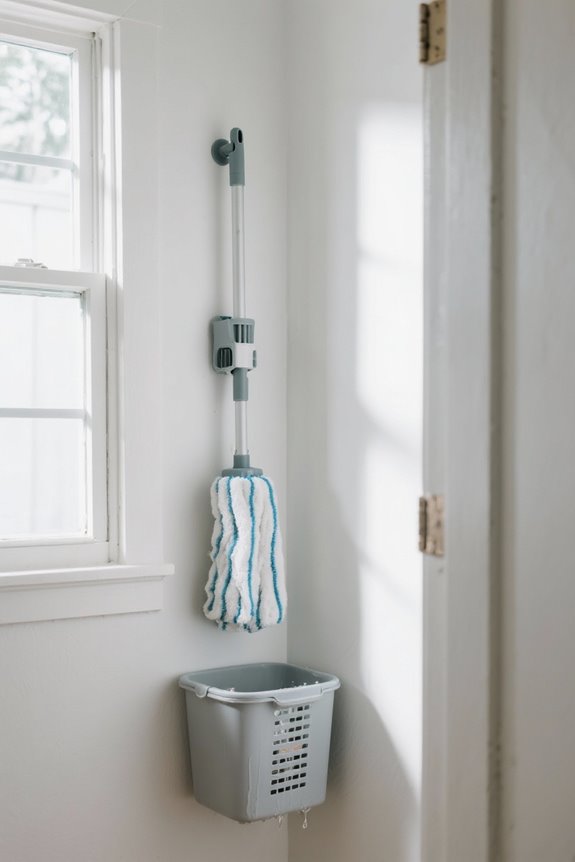
Creating the ideal storage environment for our spin mops is key to keeping them in top shape. To prevent mold growth, we should choose the right storage locations. Avoid close, unventilated spaces like closets; they breed humidity. Instead, let’s prioritize areas with good air circulation.
Using open racks or hooks allows for better airflow, keeping our mops dry. We should also consider temperature and humidity—staying under 60% humidity is essential! To achieve this, we might want to use a dehumidifier if our storage space feels damp. And what do we do with mop heads? Let them hang freely to dry, avoiding any moisture-trapping setups. An organized, well-ventilated space keeps our mops in tip-top shape! Additionally, consider utilizing moisture-resistant materials in your storage solutions to enhance longevity and prevent dampness.
Utilizing Moisture Absorbers Effectively
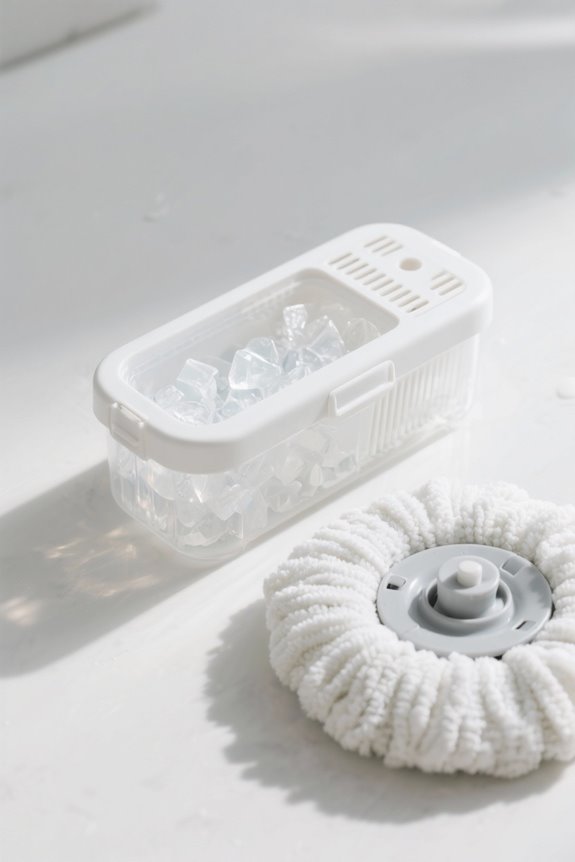
To keep our spin mops in excellent condition, we can effectively use moisture absorbers in their storage areas. These handy tools, like silica gel or calcium chloride, help with moisture absorption techniques by attracting water vapor. By placing moisture absorbers near our mops, we can greatly reduce humidity and prevent mold. Additionally, ensuring that our mop heads are made from 100% premium microfiber can further enhance their longevity and cleanliness. Let’s remember to position them wisely—hanging them nearby but not in direct contact with wet mop heads works wonders. We should replace our absorbers every 30 to 60 days as needed. Also, using bamboo charcoal bags is a great idea since they deodorize, too! By implementing these humidity control strategies, we’ll keep our mops fresh, clean, and ready for action—no one likes a moldy mop, right?
Recommended Storage Methods and Positions

Storing our spin mops the right way can make a big difference in keeping them fresh and ready for cleaning. Let’s focus on proper mop head positioning and vertical storage to prevent moisture build-up. First, we should always store our mops upright; this helps with quick drying and stops water from pooling at the mop head. Hanging mop heads from hooks or racks is great for air circulation, too!
Using racks that let the mop heads hang freely avoids contact with damp surfaces. Remember, we want those fibers to be fully extended to prevent tangling and damage. By keeping our mops in well-ventilated areas, like near windows, we set them up for success against mold! Additionally, ensuring that the mop heads are made from machine-washable microfiber can further enhance their longevity and cleanliness during storage.
Cleaning and Maintenance Before Storage
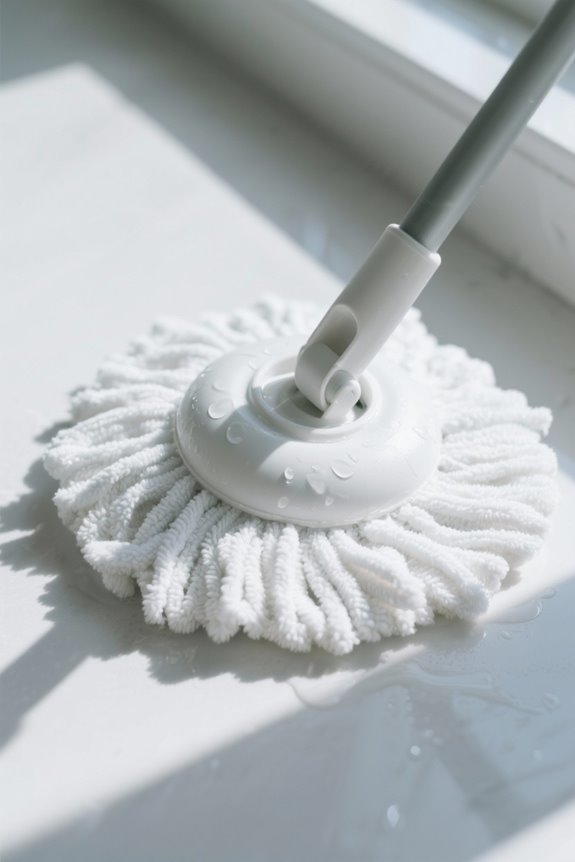
Before we put our spin mops away, it’s important we give them a good cleaning—think of it as a revitalizing spa day for our cleaning tools! Proper mop maintenance starts with a thorough rinse after each use to remove dirt and cleaning product residue. We should also consider machine washing microfiber mop heads as per the manufacturer’s instructions, aiming for weekly cleaning frequency.
Let’s soak them in warm, soapy water monthly for a deep clean, avoiding bleach or fabric softeners. Don’t forget to air dry the mop head completely in a well-ventilated area before storage. And while we’re at it, let’s give our mop bucket a good scrub too; regular rinsing will help keep everything fresh and mold-free! Keeping an eye on the replacement intervals for mop pads can also prolong the life of your spin mop and enhance its effectiveness.
Inspection Practices for Mold Prevention
When we store our spin mops, regular inspections can help us catch potential mold issues before they become a big problem. To maintain effective inspection frequency, we should conduct visual checks at least once a month. During these checks, we’ll look for signs of mold, mildew, or any unpleasant odors. And remember to inspect those mop fibers for discoloration or slimy patches—yikes!
We also need to make sure mop heads are completely dry before storage. Checking the humidity levels with a hygrometer is smart, too. If things feel damp, we could be setting ourselves up for a mold party! Finally, let’s keep vents clean and make sure proper airflow, which makes a big difference in keeping our mops fresh. Durable materials used for storage solutions can also aid in maintaining a clean and mold-free environment. Happy inspecting!
Signs of Contamination to Watch For
Recognizing the signs of contamination in our spin mops is essential for maintaining a clean and healthy environment. We should be vigilant for visual signs like black or green spots, which indicate mold growth. If we notice a musty odor, it could signal mold symptoms even if we don’t see anything.
Using proper inspection techniques can help us catch issues early. Look for dampness in storage areas or dark stains on mop fabric. If mops feel slippery or leave residues, those are red flags too! Noticing these signs helps us avoid health issues like respiratory irritation or skin reactions. Additionally, regular washing of mop pads is crucial to prevent mold buildup and maintain optimal performance. Let’s make a habit of checking our mops regularly to keep both our tools and our homes mold-free. Happy cleaning!
Best Practices for Regular Replacement
To keep our spin mops in top shape, regular replacement of mop heads is key. We should aim for frequent replacements, typically every 2–3 months with normal use. However, if our mop’s seeing heavy traffic—think kitchens and bathrooms—we might want to change it every 1–2 months.
Noticing frayed fibers or persistent odors? That’s a sure sign to swap heads. Regular changes are essential for good hygiene practices, as outdated mop heads can harbor bacteria and smell bad. Let’s also consider our cleaning habits; daily use means we need to be more vigilant. If you care for kids or allergy sufferers at home, frequent replacements become even more important for the family’s health. Who wants to mop with a dirty mop, anyway? Additionally, microfiber mop heads effectively capture over 99% of bacteria and dirt, enhancing cleaning performance and hygiene.
Maintaining Clean Storage Areas
Maintaining clean storage areas for our spin mops is essential to keeping them in top condition. First, we should control the environment. A dry, cool space helps reduce humidity and prevent mold growth. Using dehumidifiers or keeping storage well-ventilated makes a big difference.
Next, our cleaning frequency matters. We need to rinse and wring out mop heads completely before storing them. This keeps moisture levels low. Avoid storing our mops in humid places, like bathrooms, where mold thrives. Elevating storage bins prevents moisture absorption from the floor too.
Lastly, let’s regularly inspect our storage areas for mold or dampness and clean surfaces. Additionally, incorporating anti-slip features can further enhance the stability of the storage setup, ensuring that our cleaning tools remain in optimal condition. By prioritizing storage cleanliness, we can extend the life of our spin mops and guarantee effective cleaning every time!
Frequently Asked Questions
Can I Use Fabric Softener on Mop Heads?
We shouldn’t use fabric softener on mop heads. While it might seem like a benefit, it actually reduces absorbency. Following our mop care tips, we can keep them effective and in great shape for cleaning.
How Often Should I Disinfect My Spin Mop?
We should disinfect our spin mops after every use, ensuring proper mop cleaning. By establishing this disinfecting frequency, we’ll effectively reduce bacteria and maintain a clean environment. Consistency is key for hygiene!
Is It Safe to Store Spin Mops in the Garage?
It’s not always safe to store spin mops in the garage. We should prioritize mold prevention by ensuring proper ventilation, keeping them dry, and avoiding exposure to humidity and fluctuating temperatures.
Can I Replace Mop Heads With Generic Brands?
Yes, we can replace mop heads with generic brands, but we should guarantee mop head compatibility first. It’s essential to check attachment mechanisms and material quality to maintain cleaning efficiency and avoid potential issues.
What Should I Do if My Mop Smells Musty?
If our mop smells musty, we should clean it thoroughly with hot water and detergent, then consider using vinegar solutions. For mold prevention, let’s guarantee it dries completely and follow musty odor solutions for future storage.


