As an Amazon Associate, we earn from qualifying purchases. Some links on this site are affiliate links at no extra cost to you. Our recommendations are based on thorough research and editorial judgment.


How To Reduce Plastic In Storage Solutions?

Reducing plastic in storage solutions is essential for a healthier planet. We can start by opting for sustainable alternatives like natural fibers, which include bamboo and jute. Metal and glass containers are also great choices because they’re durable and recyclable. Don’t forget silicone! It’s reusable and safe for food storage. Plus, by encouraging reuse and supporting circular economy practices, we can make a big difference. Want to discover more eco-friendly options? Keep going!
Key Takeaways
- Opt for storage options made from natural fibers like bamboo, jute, or seagrass to minimize plastic use.
- Use glass and metal containers for food storage, which are reusable and non-toxic alternatives to plastic.
- Participate in initiatives that promote the reduction of single-use plastics and encourage using durable storage solutions instead.
- Educate yourself and others on the importance of reusing items to reduce the demand for disposable products.
- Support recycling programs and choose products designed for easy disassembly to facilitate efficient recycling.
Understanding the Importance of Reducing Plastic in Storage
When we think about storage solutions, it’s easy to overlook the plastic components, but reducing plastic in these systems is essential for several reasons. First, plastics can be a huge source of environmental waste. Many are single-use, ending up in landfills and oceans where they take forever to degrade. Plus, the production of plastic emits greenhouse gases, leading to climate change. So, embracing sustainable practices and eco-friendly materials can make a real difference. Additionally, eco-friendly storage bins made from recycled materials provide a practical alternative to traditional plastic options.
Moreover, there are health implications. Chemicals in some plastics can leach into food, causing concerns of hormonal disruption. By prioritizing alternatives and reducing plastic in our storage practices, we’re not only supporting environmental awareness but also protecting our well-being. Let’s consider alternatives that are kinder to our planet and ourselves!
Choosing Natural Fiber Alternatives for Storage

Natural fiber alternatives are gaining popularity as we seek to reduce plastic in our storage solutions. It’s exciting to see how materials like bamboo, jute, and seagrass are stepping up. Bamboo storage options are not only sustainable but also durable. Jute baskets and cotton sacks are lightweight, perfect for organizing small items. For a touch of elegance, rattan boxes and wicker organization can elevate your space while keeping it eco-friendly. Plus, seagrass bins add a natural decor element to any room. They’re breathable and help prevent moisture buildup. By choosing these eco-friendly materials, we can embrace stylish, functional storage without plastic! Who wouldn’t want that? Additionally, options like handwoven water hyacinth offer both beauty and functionality in storage solutions. Let’s make the switch together!
The Benefits of Metal and Glass Containers
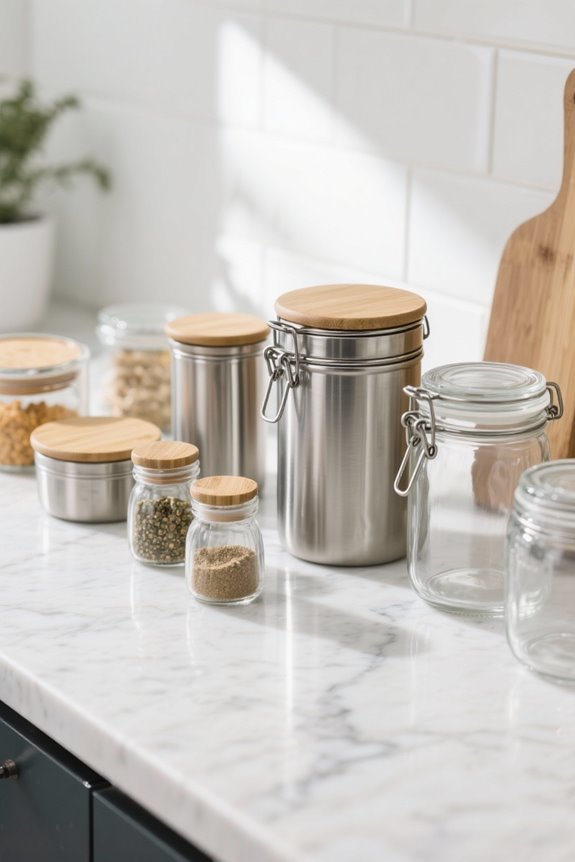
While we all want our storage solutions to be effective, we also care about the materials we use. Glass containers provide numerous benefits. They’re durable, non-toxic, and can handle extreme temperatures, making them perfect for microwaves or ovens. Plus, they’re 100% recyclable, which is great for the environment! Airtight seals also enhance the longevity of food stored in glass containers.
Let’s not forget the metal container advantages. Stainless steel containers are incredibly durable and resistant to corrosion. They keep our food fresh with excellent barrier properties. Both materials prevent chemical leaching that plastic often leads to, ensuring our food stays safe.
Switching to glass and metal isn’t just smart; it’s our way of caring for our health and the planet. Who knew storage could be this responsible?
Exploring Silicone as a Reusable Option
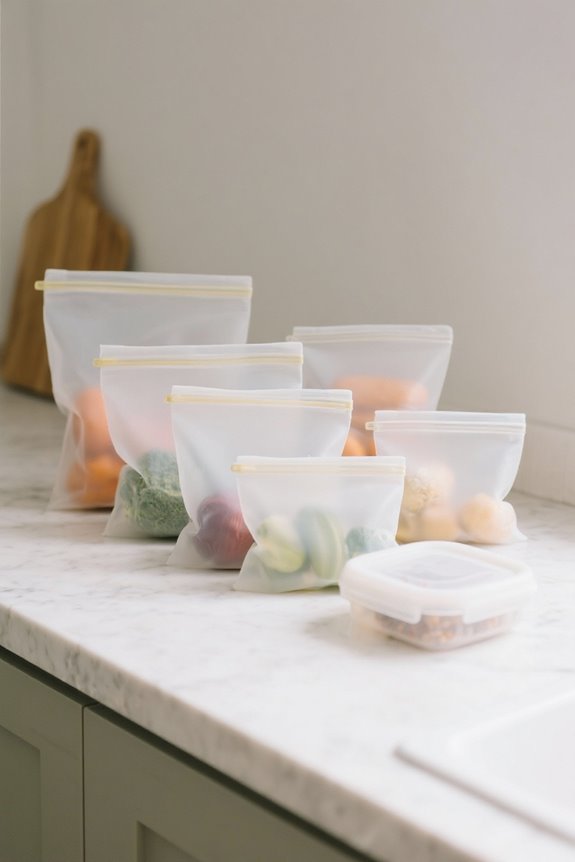
Exploring silicone as a reusable option opens up exciting possibilities for our kitchens. Not only is silicone durable, but it also offers numerous silicone benefits that make it an ideal choice. Unlike plastic, silicone is free from harmful chemicals, keeping our food safe. It handles extreme temperatures well and won’t release toxins in the microwave or oven.
Thanks to its flexibility, silicone can endure rough handling without cracking or tearing, lasting for years. This longevity translates into cost savings, as we won’t need to replace them often. Plus, they’re easy to clean—just toss them in the dishwasher! Additionally, silicone is BPA-free and shatter-resistant, making it a safe alternative for food storage. So, if we want to reduce plastic waste while investing in safe, flexible storage, silicone might be our best bet!
The Role of Paper-Based Packaging in Sustainable Storage
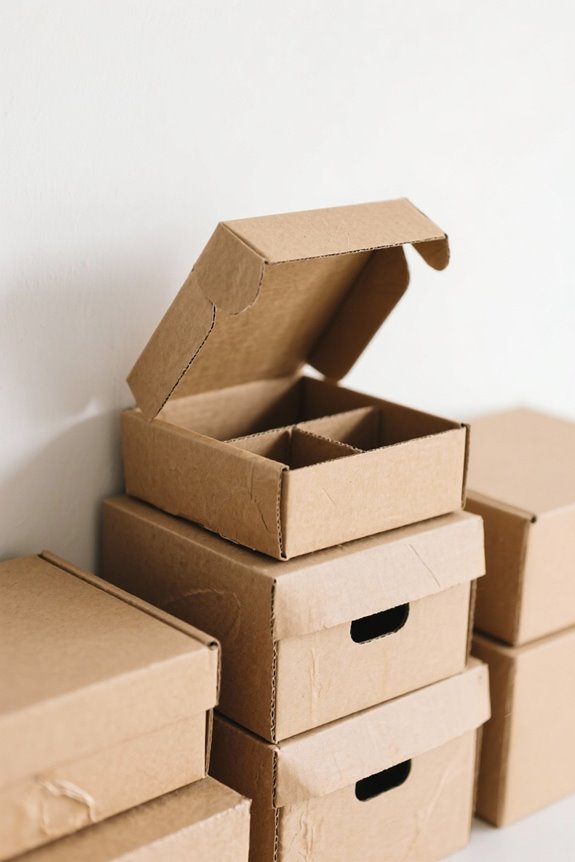
When we think about sustainable storage solutions, paper-based packaging often comes to mind as a strong contender against plastic. It’s 100% recyclable and biodegradable, which means it breaks down naturally and reduces waste. Plus, with sustainable paper sourcing from responsibly managed forests, it supports our ecosystems. Isn’t that neat?
Many consumers now prefer brands with eco certifications, like FSC or PEFC, which assure us they follow responsible forestry practices. Think about using paper packaging like cardboard boxes or padded mailers for your storage needs. They’re not just good for the environment; they help companies save on shipping costs, too. By choosing paper, we contribute to a circular economy. Paper-based packaging is also versatile, making it suitable for various storage solutions. Who knew saving the planet could be so practical?
Utilizing Wood Products for Eco-Friendly Solutions
Utilizing wood products for our storage solutions can be a game changer in reducing plastic use. Wood packaging, like pallets and crates, consumes less energy to produce and releases fewer greenhouse gases than plastic. Plus, wood acts as a carbon sink, which means it helps store carbon dioxide and fight climate change.
What’s even cooler? Wood pallets are often reused and repaired, giving them a longer life. When they finally reach the end of their journey, they can be recycled into mulch or biofuel, adding even more value. This natural material not only reduces our reliance on plastics but also supports carbon offsetting through its eco-friendly properties. Additionally, choosing customizable wood closet systems can enhance your storage organization while promoting sustainability. So, let’s consider wood as a sustainable alternative for our storage needs!
Enhancing Recycling Infrastructure for Better Plastic Management
To tackle the growing plastic problem we face, enhancing our recycling infrastructure is essential. We need to invest between $36.5 billion and $43.4 billion in modernizing our collection systems. This means upgrading curbside collection and drop-off sites, as well as processing facilities. Imagine boosting our current 32% recycling rate to 61% by recovering an additional 82 to 89 million tons of waste!
With better systems, we can meet the EPA’s goal of a 50% nationwide recycling rate by 2030. Let’s not forget that stronger regulations and public education can greatly improve participation and reduce contamination in recycling streams. By investing wisely now, we can set ourselves up for a more sustainable future. Airtight storage containers can also play a role in reducing plastic waste by providing durable alternatives for food storage. Who’s with me?
Designing for Recyclability: The Case for Mono-Materials
With improvements in recycling infrastructure underway, it’s time we explore how designing for recyclability can further tackle our plastic issues. Mono material innovations play an essential role in making recycling simpler. By using just one type of polymer in packaging, we eliminate separation challenges, making it easier to recycle. This boosts packaging efficiency and reduces contamination, allowing for cleaner recycling streams. Plus, when we design with a single material, we support the circular economy. This means less waste and a smaller footprint on our planet. So, let’s think about how we can embrace mono-materials in our storage solutions. They not only help us recycle better, but they can also save costs, which is a win-win for everyone!
Encouraging Reuse and Avoiding Single-Use Plastics
When we think about cutting down on plastic waste, reusing items rather than reaching for single-use options can make a huge difference. By using durable materials, like stainless steel or glass, we can enjoy their benefits for hundreds of uses. That’s way better than tossing out single-use plastics!
To encourage this shift, we should promote incentives, like discounts for those using reusable containers. Plus, consumer education helps everyone understand the importance of reuse, right? Schools and communities can teach us how easy it is to return items with effective collection systems. Additionally, using organizers made from durable, non-scratch materials can help reduce the need for frequent replacements.
When enough people join in, we can create a sustainable future and make single-use plastics a thing of the past. Let’s work together for a cleaner planet!
Supporting Circular Economy Practices in Storage Solutions
As we champion the reuse of materials, it’s important to explore how circular economy practices can further decrease our plastic footprint. By implementing circular design strategies, we focus on extending product lifecycles. For instance, repurposing storage components for different uses not only reduces waste but also eases our dependency on new materials.
Supply chain collaboration is essential. When manufacturers, suppliers, and recyclers work together, they can identify best practices, share resources, and create innovative solutions that promote recycling and reuse. Think of it as teamwork for our planet!
Additionally, designing products for easy disassembly helps guarantee materials can be recovered and recycled efficiently. Document storage bins can be made from durable materials that enhance their longevity, thereby reducing the need for frequent replacements. Together, we can embrace these circular practices to create sustainable storage solutions that benefit everyone.
The Impact of Consumer Behavior on Reducing Plastic Waste
Understanding the role we all play in reducing plastic waste can seem intimidating, but it doesn’t have to be. Our consumer awareness directly influences plastic pollution. While we might recognize plastic’s environmental impact, many of us still choose convenience over sustainability. We often think businesses are the main culprits, but sharing responsibility is crucial.
To drive behavioral change, we can:
- Embrace reusable products, even if they’re a bit pricey.
- Push for stricter regulations on single-use plastics.
- Advocate for better recycling programs in our communities.
Moreover, opting for durable materials in storage solutions can significantly lessen our reliance on disposable plastics. Let’s remember, every little action counts. It’s essential to realize our individual choices matter and can propel significant change in reducing plastic waste. Together, we can reshape the future for our environment!
Frequently Asked Questions
What Are the Environmental Benefits of Reducing Plastic in Storage?
By choosing sustainable materials and eco-friendly alternatives, we’re nurturing our planet, preventing pollution, and fostering a healthier ecosystem. Together, we can create a cleaner future, where our actions resonate with nature’s harmony and vibrant life.
Can Biodegradable Storage Options Be Composted at Home?
Yes, biodegradable alternatives can be composted at home if they’re certified. We should follow composting guidelines carefully to guarantee they break down fully, avoiding those with plastic linings to keep our compost pure and effective.
How Can I Determine Recycling Options for Different Materials?
Like a modern-day Daedalus, we can navigate recycling options by examining recycling symbols and material identification on our items. Checking these details helps us make informed decisions about what we recycle and where.
What Government Regulations Currently Exist to Limit Plastic Use?
Currently, we’ve got various plastic bans and single-use regulations popping up across states, like California and Delaware. These efforts aim to tackle plastic waste, encouraging producers to adopt more sustainable practices for a cleaner environment.
Are There Grants or Incentives for Businesses Adopting Sustainable Practices?
Like seeds sprouting in fertile soil, we can explore numerous grants and eco incentives supporting sustainable funding. There’s a wealth of opportunities to help our businesses flourish while embracing environmentally friendly practices together.


