As an Amazon Associate, we earn from qualifying purchases. Some links on this site are affiliate links at no extra cost to you. Our recommendations are based on thorough research and editorial judgment.

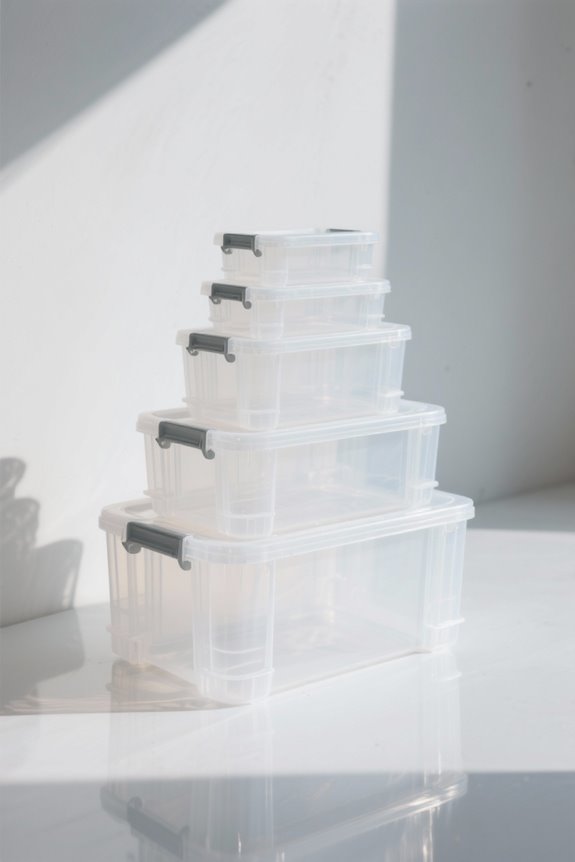
How To Stack Storage Bins Safely?

To stack storage bins safely, we need to follow key guidelines. First, always check that the ground is level and clear of debris. We should stack bins no higher than 20 feet and use stable techniques like interlocking or pyramid stacking. Don’t forget to keep aisles clear for easy access. Also, regular inspections are essential to spot any issues. Want to make sure we’ve got all our bases covered? Let’s explore more safety tips together!
Key Takeaways
- Ensure that storage bins are stacked on level ground to enhance stability and prevent tipping hazards.
- Follow the maximum stacking height limit of 20 feet to comply with OSHA regulations.
- Use appropriate stacking methods, such as interlocking or pyramid stacking, for improved stability and safety.
- Regularly inspect stacked bins for loose connections and stability to avert possible accidents.
- Train staff on proper lifting techniques and the importance of safety gear when handling storage bins.
Understanding OSHA and Safety Standards
When we’re stacking storage bins, it’s vital to keep OSHA regulations in mind to guarantee safety. OSHA guidelines, like height limitations, help prevent workplace hazards. For instance, if we’re using forklifts, we shouldn’t stack bins higher than 20 feet. Also, materials should be stacked, blocked, or interlocked to keep them stable.
It’s imperative to post signs showing maximum stacking heights and weight capacities. Remember, bins that we access often need to be within easy reach, too! Additionally, using stackable designs can further enhance space efficiency while maintaining safety.
Ignoring these compliance regulations can lead to hefty fines that could range from $5,000 to $161,000. Talk about a budget buster! By understanding and following these safety standards, we can create a safer, more efficient workplace. Let’s stay smart and compliant!
Ensuring Surface and Stability Requirements

Guaranteeing that storage bins are stacked safely requires a careful look at the surfaces they rest on and their overall stability. First, let’s talk about surface preparation. A level ground is essential for stacking—if the surface isn’t flat, bins can tilt and fall. We recommend using leveling tools to confirm the area’s evenness.
Additionally, consider material support. A solid base, like pallets or sturdy racks, boosts stability and prevents hazards. Remember to clear debris from your stacking area, which can be a sneaky way to create an uneven surface. Finally, interlock stacks and regularly inspect them to avoid any unwanted surprises. By focusing on these aspects, we can guarantee a safe stacking environment together! Furthermore, utilizing adjustable design features in your storage solutions can enhance stability and organization in your stacking process.
Recommended Products

【6 Tier Large Garage Shelving】REIBII Garage Shelving Unit's (55"W x 26"D x 84"H) 6-tier design provides you with ample space to store bulky items, like storage bins, tools, heavy totes, machinery, tires, and other equipment. This heavy-duty metal shelving is a premium choice for garages, warehouses, offices, kitchens or any room requiring robust organization

[3200lbs Capacity Heavy Duty Wire Shelving Unit] Metal Shelving are made of sturdy heavy duty steel wire and 25.2mm diameter metal rods, with extra reinforced support bars on each Shelves of the metal, with a single tier load capacity of 640lbs and a total load capacity of 3200lbs.

【Extra Large Storage Bin】55 Gal (220 QT) *4 Pack, Dimensions: 33.07"(L) x 21.26"(W) x 76.77"(H) | Single box Interior: 30.71"(L) x 17.05"(W) x19.02"(H). The plastic storage bins featuring a 4.88 ft² bottom area and 6.40ft height, ideal for maximizing large-space storage in living room, garages, or storage room. (Note: For indoor use only)
Exploring Safe Stacking Methods and Patterns

Have you ever wondered how to stack storage bins safely and efficiently? We can explore various stacking techniques to maximize stability and space.
- Column Stacking: This method is fast and fits uniform bins, but it risks tipping over.
- Interlocking Stacking: Think bricklaying! It offers great stability for active spaces but takes more time.
- Pyramid Stacking: This creates a stable step-like structure, ideal for heavy items.
- Pinwheel Stacking: A bit complex but perfect for irregular shapes, enhancing airflow.
- Block Stacking: Combining strengths, this balances speed and safety for medium-term storage. Additionally, when using stackable storage bins, ensure they are made from durable materials to maintain their shape under weight.
Recommended Products

SURVIVAL ESSENTIAL: With 4320 servings of gourmet entrées & breakfast meals, READYWISE Buckets are the perfect starting point for anyone serious about preparing for the future. Stay ready for anything, from power outages to outdoor adventures!

HEAVY DUTY - 1. 5 MIL THICK - Strong enough to tolerate all residential household garbage and commercial waste. Made from industrial-strength low-density resins (thicker material).

Implementing Manual Handling Safety Practices
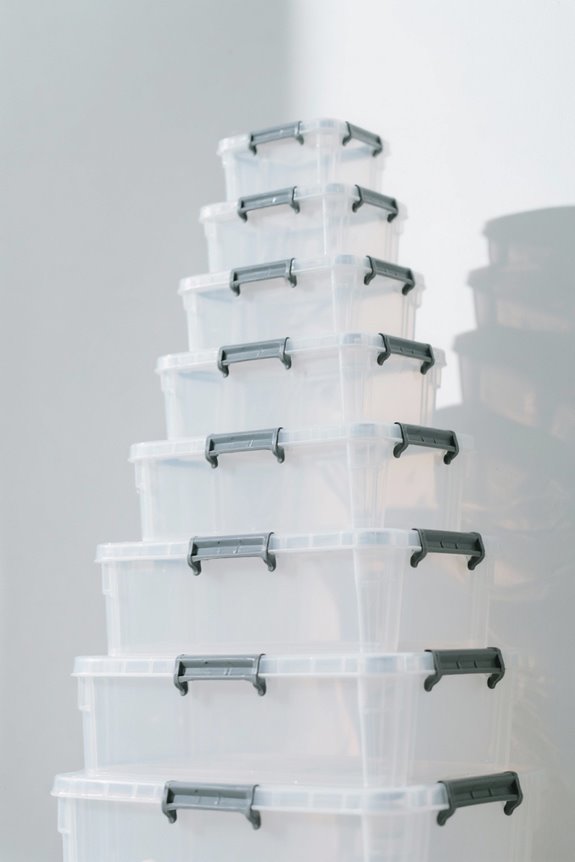
Implementing manual handling safety practices is essential for protecting ourselves while we work, especially when lifting and moving storage bins. Did you know that improper lifting can lead to painful back injuries? To prevent these issues, we should always lift with our legs and keep loads close to our bodies.
Using ergonomic principles helps too—like avoiding twisting while lifting. Let’s not forget about proper gear! Wearing gloves, steel-toed boots, and safety glasses can make a big difference in injury prevention. Additionally, stackable features in storage solutions can optimize organization and reduce the need for heavy lifting.
When tackling bulkier loads, communication is key if we’re working together, ensuring we coordinate our moves. By following these guidelines, we can create a safer workspace and reduce the risk of injuries. Let’s make safety our priority!
Preventing Storage Rack Damage
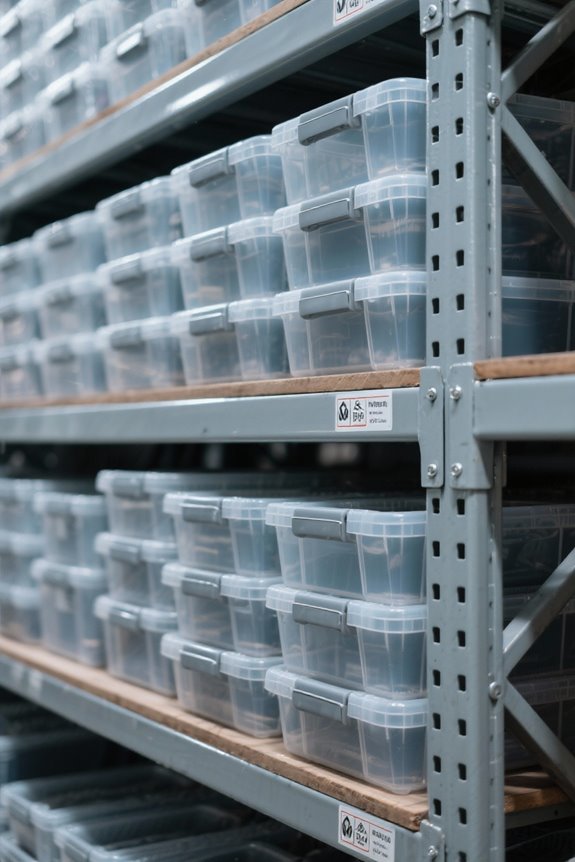
When we think about storage rack safety, it’s essential to stay proactive in preventing damage. To start, we should conduct monthly inspections, looking for loose connections and misalignment. It’s like checking for loose screws in your favorite chair—you want it sturdy!
To prevent rack impact from forklifts, let’s install column guards and use heavy-duty safety accessories. We need to guarantee proper load alignment; by distributing loads evenly across beams, we minimize strain. Remember to keep aisles clear, and if we notice sagging beams, let’s address that right away.
Also, we should anchor racks to the floor for stability—it’s key in maintaining safety. A little prevention goes a long way in keeping our storage systems reliable and safe. Additionally, utilizing stackable designs can enhance vertical space efficiency while ensuring safety and accessibility.
Recommended Products

Tough Load: Heavy Duty is the ultimate in heavy-duty cargo management. It holds 2000lbs evenly distributed, with a 95 Inch length x 48-Inch width to store your heaviest truck bed accessories

Tough Load: Heavy Duty is the ultimate in heavy-duty cargo management. It holds 2000lbs evenly distributed, with a 75-Inch length x 48-Inch width to store your heaviest truck bed accessories
Tough Load: Heavy Duty is the ultimate in heavy-duty cargo management. It holds 2000lbs evenly distributed, with a 78-Inch length x 48-Inch width to store your heaviest truck bed accessories
Utilizing Proper Labeling and Signage
We can also use standardized pictograms for quick recognition. Imagine a simple visual cue that lets us know at a glance whether a material is safe or not! Plus, signage about stacking limits is a must—too high, and we risk a collapse. Additionally, ensuring proper cleaning and maintenance of the storage bins can help prevent deterioration and ensure safety during stacking.
Separating Incompatible Materials
Although we might think storing all our materials together is efficient, mixing incompatible substances can lead to accidents and hazardous situations. To guarantee safety, we need to prioritize chemical compatibility and hazard identification in our storage practices.
- Separate Groups: Let’s keep organics away from inorganics, flammables away from oxidizers, and acids apart from bases.
- Use Barriers: Employ secondary containment, like spill trays, to capture any leaks.
- Label Clearly: Clearly mark bins to identify what’s inside, making it easy to follow those safety guidelines. Additionally, understanding stackability and secure lids can enhance safety and organization in your storage systems.
Maintaining Aisle and Walkway Clearances
Maintaining proper clearances in aisles and walkways isn’t just about being neat—it’s about safety. We need to guarantee our aisles meet the required width for safe maneuvering. For instance, when powered industrial trucks are involved, aisles should be at least 36 inches wider than the largest vehicle. This extra space is vital for safety clearance.
Also, cross aisles for employee access must be at least 24 inches wide. Let’s not forget about our walkways. They should have a minimum width of 24 inches and 6 feet 8 inches of headroom. Keeping our aisles clear of obstructions helps everyone move freely and safely. Reusable options for cleaning tools, like silicone lint rollers, also contribute to a clutter-free environment. So, let’s keep that clutter away and prioritize safety! It just makes sense, right?
Recommended Products

✅ These industrial strength stickers caution signs identify maximum load hazards specific to your facility, which offers an immediate solution to add safety to your warehouse pallet racking system and making a big impact by simply attaching them on your pallet rack cross beams. Every single label size measure 3″ High x 4″ Wide, approximately 76.2 mm in height and 101.6 mm in width, fitting most cross beams perfectly. Flexible vinyl construction allows use on both curved and flat surfaces.

Brady B-595 vinyl film with permanent adhesive

Bulk Pack Specification - Black and White, 3 Inch x 36 Feet rolls, 16 pack provides coverage for large scale floor marking projects and facility layout updates.
Using Proper Restraints and Safety Equipment
Using proper restraints and safety equipment can greatly enhance workplace safety. When we think about stacking storage bins, it’s essential to use restraint devices, like cargo nets and straps, to keep everything secure. After all, no one wants a surprise avalanche of bins! These devices prevent push-through incidents and protect our space from falling objects.
Employing effective cargo control systems also helps us comply with safety regulations, ensuring we follow best practices. Remember, safety should always be our priority. By using these tools, we not only reduce the risk of accidents but also create a smoother working environment. Additionally, using stackable designs can further enhance stability and organization when storing multiple bins. So, let’s keep our bins steady and our workspace safe—because a little caution goes a long way in the warehouse!
Recommended Products

TALLER RAIL XL CARGO HITCH CARRIER : Haul more with the Mockins Cargo Carrier Hitch Mount Basket, engineered to hold 500 lbs. on its 66"x30"x14"steel frame. Our oversized cargo racks for trailer hitch fit suitcases, camping gear, bulky furniture & more. Plus, these weatherproof vehicle cargo carriers resist corrosion with a rust-resistant finish. Whether you're exploring outdoors or hauling day-to-day, this folding tow hitch cargo carrier with 14" side rails performs reliably on every journey.

[👍Easy To Use] Preferred by top fleets worldwide for being heavy-duty, versatile and easy to use. The Gladiator Cargo Netting offers the best restraint possible for your cargo and safety while on the road. Enjoy a heavy-duty cargo net that stores conveniently, is easy to carry around, and remains tangle-free – a perfect car travel accessory.

WILDROAD Hitch Cargo Carrier with Ramp is a heavy-duty, folding storage solution measuring 48" x 26" x 4" and boasting a 500 lbs capacity. Designed for a 2" hitch receiver, it comes complete with a hitch stabilizer and four ratchet straps. This rack is easily assembled and installed on SUVs, pickup trucks, and trailers
Conducting Regular Safety Inspections
To keep our storage areas safe and organized, we need regular safety inspections. Scheduling these evaluations weekly or monthly helps us stay ahead of potential hazards. It’s essential that we document each inspection, noting findings and corrective actions taken. This way, we create a clear record that can guide us in improving safety standards.
Training our employees on safety procedures and inspection protocols guarantees everyone knows what to look for. Plus, reviewing previous safety records can help us identify recurring issues. Let’s remember, inspections aren’t just a chore; they’re our chance to make the workspace safer for everyone. So, let’s commit to these checks and keep our storage bins—and ourselves—safe! Additionally, implementing regular maintenance on storage systems can prevent potential accidents and ensure longevity.
Promoting a Culture of Safety Awareness
Creating a strong culture of safety awareness isn’t just a checkbox; it’s essential for protecting our team and our workspace. By promoting safety leadership, we encourage everyone to take responsibility for their own safety and that of their colleagues. This means engaging with our team, listening to their concerns, and empowering them to speak up about hazards.
Think of it as a team sport: the more we communicate, the better our game plan. Regular safety assessments help us measure our progress, while open channels of communication guarantee that every voice is heard.
When safety becomes a shared goal, we foster an environment where everyone can thrive. Together, let’s make safety not just a priority, but a shared value!
Frequently Asked Questions
What Types of Materials Are Best for Stacking Storage Bins?
For safe storage, we should choose durable stacking materials like sturdy plastic, metal, and composite bins. These options offer superior weight capacity, moisture resistance, and added protection, ensuring our stacked items remain secure and accessible.
How Should I Handle Damaged Storage Bins?
Damaged bins demand decisive actions. We should safely dispose of irreparable bins, preventing potential perils. Furthermore, cleaning and repairing where possible protects our possessions, ensuring that all our storage stays secure and sound.
Can I Use Any Stacking Pattern for All Materials?
No, we can’t use any stacking pattern for all materials. It’s essential to choose stacking techniques based on material compatibility, ensuring safety and stability to prevent accidents and maintain the integrity of our stored items.
What Personal Protective Equipment Is Essential for Stacking?
When stacking, we need essential PPE like safety gloves to protect our hands and protective eyewear to shield our eyes from debris. This way, we can guarantee safety throughout the stacking process.
How Often Should I Conduct Safety Inspections on Storage?
We should conduct safety audits regularly, ideally monthly or quarterly, depending on risks. Think of our facilities like ticking time bombs—consistent inspection frequency guarantees we defuse potential hazards before they escalate into serious issues.