As an Amazon Associate, we earn from qualifying purchases. Some links on this site are affiliate links at no extra cost to you. Our recommendations are based on thorough research and editorial judgment.


How To Label Storage Bins Efficiently?

Labeling storage bins efficiently can transform our organization game. First, let’s use straightforward labels with clear names and categories. Color coding helps too—think blue for office stuff and green for holiday decorations! We should consider durable materials like vinyl or self-adhesive labels, so they last longer. Placing labels where they’re easy to see is key. Regularly checking the labels keeps everything clear and organized. Want to find out how to keep our labels looking fresh?
Key Takeaways
- Use consistent naming conventions and unique identifiers for quick retrieval and organization across storage areas.
- Opt for durable label materials like vinyl sheets or moisture-resistant labels to ensure longevity.
- Place labels on clean, dry surfaces at eye level for optimal visibility and easy identification.
- Incorporate color coding and visual cues to categorize items effectively, enhancing recognition for all users.
- Regularly review and update labels to maintain organization and minimize confusion over time.
Benefits of Using Storage Bin Labels
When it comes to keeping our spaces organized, using storage bin labels can be a game changer. By implementing visual labeling techniques, we can quickly spot what we need without rummaging through bins. Imagine how much time we save when color coding strategies highlight different categories! For instance, we could use blue labels for office supplies and green for seasonal items. This not only enhances efficiency but also cuts down on errors and misplaced items. Plus, it’s adaptable for everyone—those who can’t read can still understand pictures! When labeled properly, our items have homes, reducing clutter and stress. Let’s face it, a well-organized space feels great and boosts productivity. Who wouldn’t want that? Additionally, using multi-compartment systems can further streamline the organization of your storage bins, making it easier to categorize and access items quickly.
Optimization Techniques for Storage Bin Labels

To maximize the efficiency of our storage bin labeling system, we should focus on several key optimization techniques. First, label placement plays a vital role—let’s guarantee they’re in clear view and easy to access. This helps reduce errors and speeds up our workflow.
Next, using unique identifiers, like alphanumeric codes, can seriously boost our retrieval speed. Imagine searching for a bin in seconds instead of minutes! Consistent naming conventions are also essential; they keep everything organized.
Lastly, let’s consider integrating our labels with a warehouse management system (WMS). This will allow real-time updates and better tracking of our inventory. Who wouldn’t want to streamline their tasks and make life a little easier? Additionally, using Tupperware organizers can further enhance storage efficiency by keeping items neatly arranged and accessible.
Labeling Materials and Tools for Home Storage Bins

Labeling materials and tools are essential for organizing our home storage bins effectively, especially if we want to avoid the chaos of misplaced items. We can choose from various label types, like printable sticker paper for quick fixes or vinyl sheets for added durability. When it comes to adhesive options, self-adhesive labels are easy to use, while high-bond adhesives work best for more demanding setups.
Using tools like thermal label makers or cutting machines, we can create customized labels that suit our needs. Don’t forget the importance of measuring tapes to guarantee our labels fit perfectly and look neat. By selecting the right materials and tools, we make our storage solutions both functional and appealing. Durable materials enhance the longevity of our labeling solutions, ensuring they withstand daily use. Let’s get labeling!
Labeling Best Practices for Organized Storage Areas
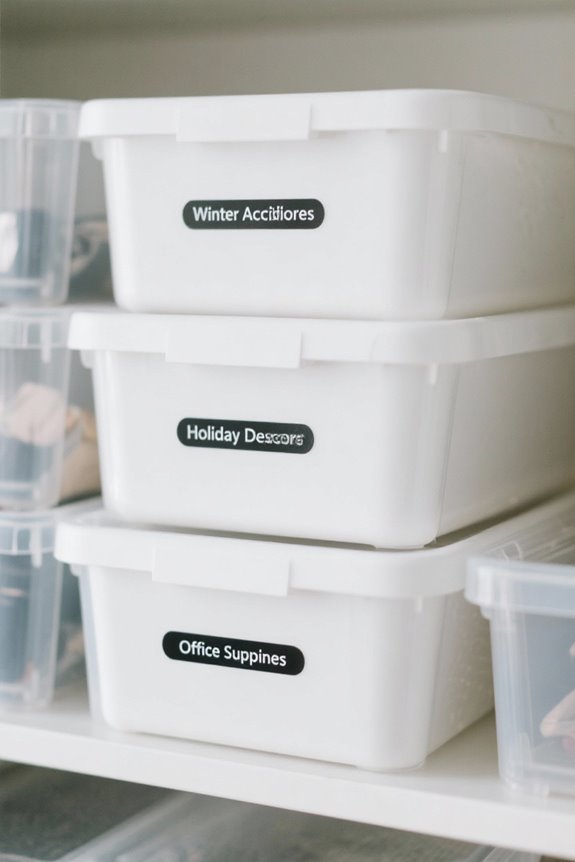
Organizing our home storage bins can feel like a puzzle, but the right labeling practices can make it a whole lot easier. To streamline our storage area, we should adopt a labeling hierarchy. This means starting with broad sections and then narrowing it down to specific bins. Also, using consistent label protocols helps reduce confusion.
Let’s not forget about visual cues! Color coding and clear descriptions can speed up identification. We can use durable labels that withstand wear and choose sizes that enhance visibility. Placement matters too; labels should be easy to see without ducking or squinting. By implementing these practices, we’ll create a more organized and efficient storage area, making our lives just a bit simpler! Additionally, considering size and dimensions when selecting storage bins can further aid in optimizing organization and accessibility.
Budget-Friendly Labeling Solutions for Storage Bins

When we want to keep our storage bins organized without breaking the bank, there’s no need to stress. Thankfully, budget-friendly options abound. For instance, white duct tape from Dollar Tree paired with a black sharpie makes a great creative labeling solution. Clip-on chalkboard labels, also from Dollar Tree, are perfect for fabric bins at just $0.25 each.
We can also use masking tape and markers—simple yet effective—and even printable Avery labels that let us customize as we please. If we’re feeling crafty, a Cricut machine will help us create chic vinyl labels. By utilizing affordable materials like these, we can make our storage bins not only organized but stylish too. Who knew labeling could be so fun and cost-effective? Additionally, incorporating clear plastic designs enhances visibility, making it easier to identify contents at a glance.
Efficiency Gains From Clear Labeling in Storage Management
Effective labeling can truly transform our storage management practices, making it easier for us to keep everything in the right place. When we embrace clear labels, we enhance our labeling effectiveness and create a smoother workflow. Imagine cutting retrieval times markedly; labels guide us straight to the correct bin, boosting our picking speed and minimizing bottlenecks.
Well-structured labels also allow us to familiarize ourselves with storage layouts quickly, enabling consistent and rapid task execution. By reducing guesswork, we lower labor intensity, saving on overtime costs too. In short, clear labeling leads to streamlined retrieval and improved inventory management, empowering us to handle more orders without needing additional staff. Additionally, using stackable storage bins can further optimize our space management. Isn’t that a win-win solution?
Choosing the Right Label Size and Material
To make labeling our storage bins truly effective, we need to think carefully about both size and material.
Finding the right label size is essential. For small spice jars, aim for labels about 1.5″ x 1″, while medium bins work well with 2″ x 4″ labels. Large bins can handle up to 4″ x 6″ labels for extra info. Don’t forget to measure and leave some margin to avoid wrinkling!
Next, we should consider label materials. Paper labels are great for dry areas, but for moisture-prone environments, polyester labels are a better fit. They’re durable and resistant to chemicals. Shall we step it up with vinyl for flexibility, or tamper-evident materials for safety? Remember, choosing wisely enhances our storage efficiency! Additionally, selecting storage solutions with compartment customization options can help in optimizing space and organization.
Implementing a Logical Labeling System
Implementing a logical labeling system not only makes our storage more efficient, but it also saves us time during busy workdays. First, we need to standardize our labels with a clear structure—using barcodes alongside human-readable text. This helps with quick scanning and manual checks.
We should also adopt consistent naming conventions across all storage areas to avoid confusion. Think of it as naming our favorite pets; each name needs to represent its unique identity!
Technological integration is essential here. By linking our labels to systems like barcode scanners, we streamline tracking and reduce errors. As we combine these elements, we create a labeling variety that enhances clarity and speed. With clear labels, we make retrieving items a breeze! Additionally, choosing stackable or nestable designs for our storage bins can further optimize space and organization.
Maintaining Labels for Long-Term Durability
Maintaining labels for long-term durability is essential if we want our organization to run smoothly. To guarantee our labels last, we should prioritize label longevity strategies, focusing on moisture resistant materials. For example, polyester and polypropylene labels work great in damp environments, preventing wear and tear.
We can also use acrylic adhesives for strong bonding on various surfaces, keeping labels intact. Additionally, adding laminations or protective sleeves helps shield our labels against dirt and UV light, enhancing their lifespan. Regularly inspecting our labels allows us to catch worn ones before they cause confusion. Don’t forget to keep a few spares handy—it’s always better to be prepared! By following these steps, we can keep our systems organized and efficient over the long haul. Furthermore, using clear containers for visibility can enhance overall organization and aid in identifying contents quickly.
Frequently Asked Questions
How Often Should I Update My Storage Bin Labels?
We should update our storage bin labels every 3–6 months, ensuring proper labeling frequency and maintenance. Additionally, let’s review them during audits and after inventory changes to keep everything organized and effective.
Can I Use Digital Labels for Storage Bins?
Absolutely, we can use digital labels for storage bins! They offer smart bin solutions with advantages like real-time updates and improved accuracy, boosting our efficiency and reducing errors in inventory management. Let’s embrace this technology together!
What Information Is Essential to Include on Labels?
We think essential details for labeling strategies include clear item categories, specifics about contents, unique identifiers, and intuitive terminology. This helps us quickly identify and retrieve items without confusion, enhancing our organization and efficiency.
Are There Specific Colors Best Suited for Labeling?
Just like a painter chooses colors for harmony, we’ve found that using contrasting colors enhances legibility and impact. Understanding color psychology helps us create effective labels that make organization feel effortless and enjoyable.
How Can I Ensure My Labels Are Resistant to Fading?
To guarantee our labels are resistant to fading, we should use waterproof label materials and UV resistant inks. This combination provides durability and maintains color vibrancy, keeping our labels looking fresh and pristine over time.