As an Amazon Associate, we earn from qualifying purchases. Some links on this site are affiliate links at no extra cost to you. Our recommendations are based on thorough research and editorial judgment.

How To Organize Tools For Easy Access?

To organize tools for easy access, we should centralize storage in convenient locations. Using labeled drawers can help us identify tools quickly. Categorizing them by type, like hand tools or power tools, makes finding what we need simpler. For daily-use tools, keep them within arm’s reach. Additionally, consider small parts organizers for screws and nails—they’re lifesavers! By prioritizing organization, our work becomes more efficient and less stressful. Stick around, and we’ll share even more tips to enhance our tool game!
Key Takeaways
- Categorize Tools by Type: Sort tools based on their function, making it easier to locate the right tool quickly when needed.
- Implement Centralized Storage Solutions: Use tool cabinets or rolling carts for organization, ensuring a centralized location for quick access and security.
- Utilize Clear Labeling: Label storage locations and tools clearly to promote efficiency and minimize search time, enhancing overall safety and organization.
- Ensure Everyday Tools Are Accessible: Keep frequently used tools within arm’s reach to streamline workflow and reduce time spent retrieving them.
- Adopt Stackable and Modular Storage: Use stackable containers and modular systems to save space and maintain a tidy workspace without clutter.
Benefits of Tool Organization
When we talk about the benefits of tool organization, efficiency often comes to mind. Keeping our tools tidy helps us get work done faster. Instead of rummaging through clutter, we can grab what we need in seconds. This not only saves time but also boosts our productivity, making projects run smoother.
Plus, organized tools result in better tool maintenance. When everything’s in its place, we’re less likely to misplace items or damage them. Who hasn’t stepped on a rogue hammer, right?
And let’s not forget the workspace aesthetics; a clean, organized area looks professional and feels inviting. So, by keeping our tools organized, we improve efficiency, maintain our gear, and create a visually appealing workspace. Tool storage solutions can significantly enhance accessibility and organization, making your tools easier to find. What’s not to love about that?
Centralized Storage Solutions

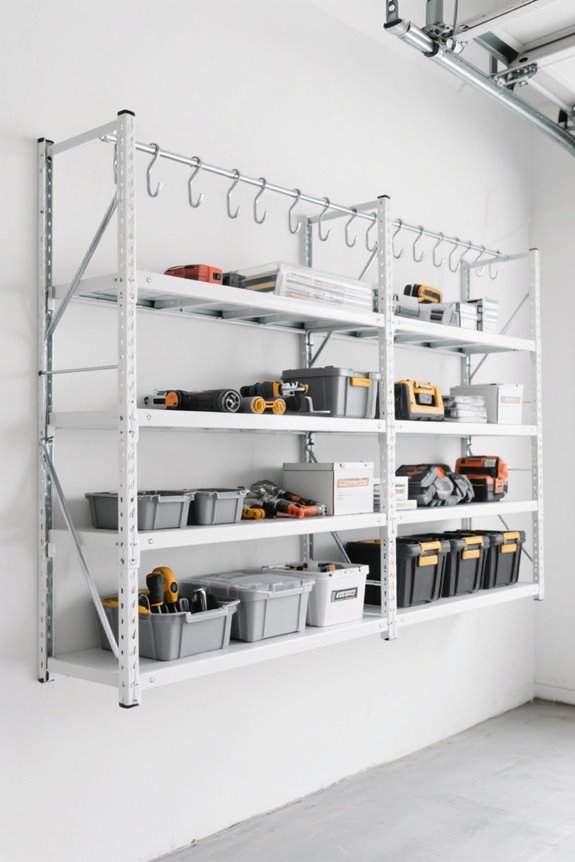
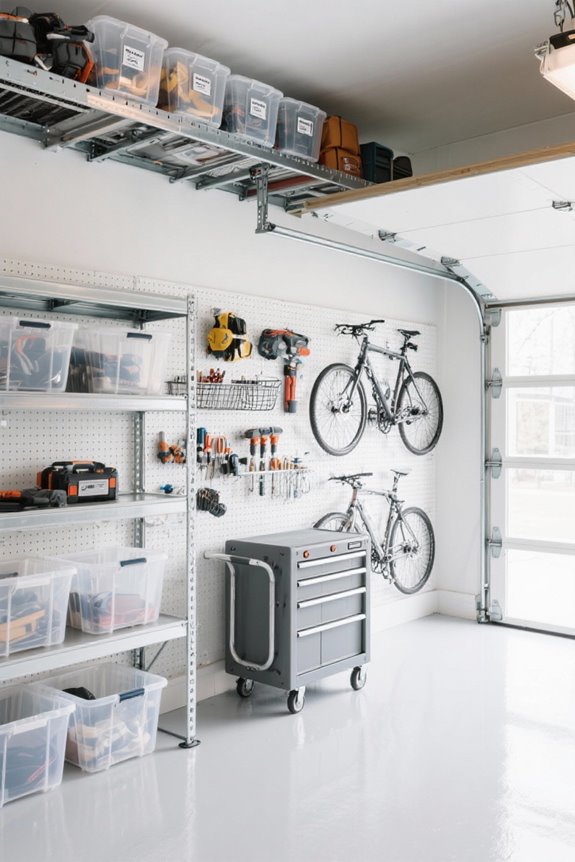
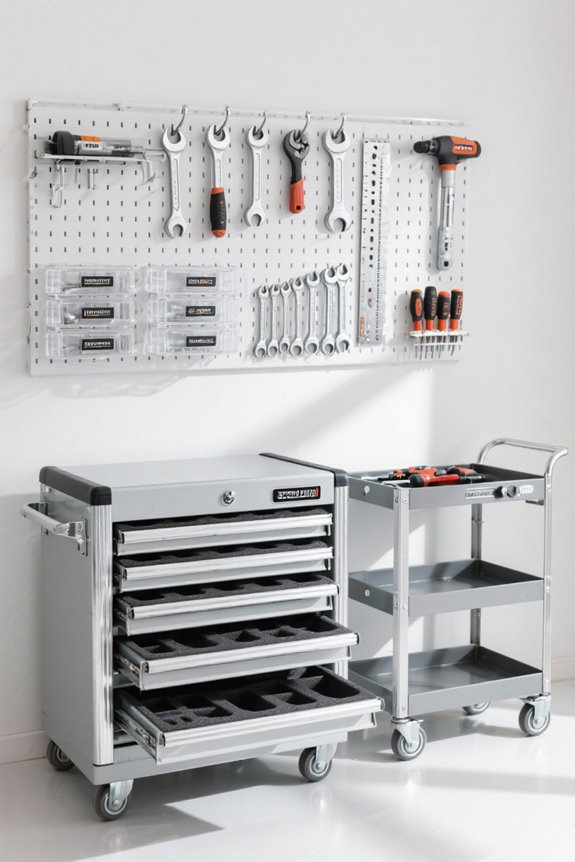
Organizing tools isn’t just about keeping things neat; it’s about having a centralized storage solution that works for us. Centralized storage means we can find our tools quickly and keep everything secure. Modular solutions, like customizable tool cabinets, allow us to expand as our tool collection grows. With various drawers, we can organize different tool types easily. Rolling tool cabinets made with durable materials not only protect our tools but also make moving them around a breeze. Plus, we can even integrate small parts organizers for screws and nails, making sure nothing gets lost in the chaos. Remember, having a well-organized space improves our workflow and keeps our creativity flowing! Additionally, incorporating multi-compartment systems can significantly enhance the accessibility of our tools.
Effective Categorization Techniques

Effective categorization techniques can transform our tool organization from chaotic to seamless. By implementing thoughtful tool categorization, we can enhance tool accessibility. Let’s break it down:
- Type and Function: Group tools into categories like hand tools, power tools, and measuring instruments. Subcategorize further for cutting or fastening tools.
- Frequency of Use: Store daily tools within easy reach while placing infrequent tools out of the way.
- Projects: Sort tools by project types—carpentry or electronics. Creating dedicated kits saves time!
- Size and Weight: Organize small tools in drawers and larger tools on shelves to avoid clutter. Additionally, utilizing customizable options can further enhance your organizational system to fit various tools effectively.
Importance of Labeling

Labeling tools might seem like a minor detail, but it can make a world of difference in our workspace. Effective tool identification is essential for safety and efficiency. When tools are clearly labeled, we reduce the risk of accidents and misplaced items. Imagine easily spotting a wrench instead of rifling through a cluttered drawer—it saves time, right? Using simple labeling techniques can enhance productivity by streamlining our workflows. A consistent approach keeps our workspace organized, which looks more professional, too! Plus, when everyone knows where tools belong, accountability improves—no more wandering off with that fancy screwdriver. Additionally, clear labeling helps in quick identification of contents, making it easier to find the right tool when you need it most.
Implementing Inventory Management

Implementing an inventory management system can feel like setting up a new gym routine—initially overwhelming, but transforming our workspace in the long run. We can start by using automated tracking systems, like RFID tags, to monitor our tools in real-time. This way, we streamline inventory control and minimize errors.
Regular cycle counts help us keep tabs on critical items, while cloud-based software keeps our data accessible across devices. We can even set up reminders for low stock levels, ensuring we never run short. Incorporating stackable designs into our storage solutions can further enhance organization and accessibility.
Standardization Practices for Tools
When it comes to organizing tools, standardization can feel like finding the missing puzzle piece that completes the picture. By implementing standard operating procedures, we can guarantee everyone knows how to use and store tools consistently. This cuts down on mistakes, saves time, and keeps our workspace clutter-free.
Visual management plays a key role here. Using clear labels with specific names helps us quickly identify where tools belong. Color-coding and pictorial guides simplify finding and returning tools, reducing frustration.
For a smooth operation, let’s establish a cycle for using tools and assign logical storage spots based on frequency. This way, our tools will always be ready when we need them—no more searching around or misplacing items! Incorporating self-wringing mechanisms can also enhance efficiency by making tool use more convenient and effective.
Utilizing Tool Tracking Systems
After establishing a strong foundation with standardization practices, it makes sense to explore how tool tracking systems can further enhance our organization. These systems provide real-time tracking of tools, giving us visibility into their location and condition. By assigning tools to specific employees or job sites, we can boost tool accountability and guarantee everyone knows which tools are theirs.
With a centralized database, we always know what we have and where it is, reducing downtime. Plus, using barcodes or RFID tags can deter theft—who wants to be caught with a tool that’s not theirs? Regular inventory checks can also help us quickly locate missing tools, keeping our projects running smoothly and efficiently. The benefits of clear storage bins isn’t that a win-win?
Workplace Organization Tools Overview
In today’s fast-paced work environment, choosing the right workplace organization tools is like picking the best tools for a job—absolutely essential! We have a variety of digital workplace tools to evaluate, including chat apps, task management software, and collaboration platforms.
Selecting the right tools isn’t just guesswork; it’s about smart tool selection based on user feedback. By listening to our teams, we can avoid confusion and boost productivity.
For example, using tools like Airtable for task management can streamline workflows, improving clarity on responsibilities. Plus, integrating different platforms keeps everything in one place, reducing stress. Additionally, utilizing heavy-duty storage bins can significantly enhance the organization of physical tools, ensuring easy access and reducing clutter.
Data Integration Best Practices
Organizing our tools isn’t just about tidiness; it’s a strategy that opens up better productivity, especially when we talk about data integration. To get started, we should define clear integration goals. This means knowing what we want to achieve, like real-time insights or eliminating data silos.
Next, we need to understand our data sources thoroughly, documenting their structure and quality. Remember, clean data is essential!
We can leverage some best practices, such as automating repetitive tasks, which saves time and reduces errors. Security is also crucial; we can’t overlook protecting our data. Implementing advanced design features in our tools can also enhance efficiency and effectiveness.
Finally, let’s continuously review and adjust our strategies as objectives shift. By following these steps, we can streamline our data integration and enhance our teamwork.
Six Sigma Approaches to Tool Organization
When it comes to tool organization, using Six Sigma approaches can really streamline our processes and boost efficiency. One effective method is the 5S system, which helps us sort, set in order, shine, standardize, and sustain our tools. With 5S, we not only declutter but also create a more efficient workspace.
Additionally, the DMAIC framework—define, measure, analyze, improve, and control—allows us to identify issues and implement data-driven solutions. For instance, by measuring tool retrieval times, we can pinpoint improvements. Incorporating durable storage bins can further enhance the organization and accessibility of tools.
Finally, visual management techniques, like labels and shadow boards, enhance organizational efficiency. So, let’s embrace these Six Sigma strategies to optimize our tool organization, making work smoother and more enjoyable!
Enhancing Safety Through Organization
Safety is a fundamental concern for everyone in the workplace. When we organize our tools effectively, we greatly reduce risks and hazards. By ensuring ergonomic placements—like keeping heavy tools at waist level—we lower the chances of strain and injury.
Conducting regular safety audits helps us pinpoint and address potential hazards before they lead to accidents. For instance, labeling tool locations not only minimizes search time but also prevents hurried movements that could cause slips and trips. Using pegboards or magnetic strips keeps tools securely in place, making them easy to spot.
Let’s work together to create a safe environment by maintaining clear areas, organizing our tools smartly, and regularly checking our practices. After all, safety should never be an afterthought!
Boosting Productivity With Accessible Tools
Accessible tools can greatly enhance our productivity, and who doesn’t want that? By focusing on ergonomic tool placement, we can position essential items within easy reach. This setup minimizes unnecessary movements, allowing us to work more efficiently. When we think about mobile tool accessibility, we’re also considering how easy it is to access tools from various locations, whether in the office or at home.
For example, having a well-organized toolkit on wheels can mean the difference between a productive day and a frustrating one. Plus, integrating high-tech solutions—like automated task reminders—can save us hours each week. Ultimately, when tools are accessible, we’re more likely to stay focused and complete tasks on time. So, let’s keep it organized!
Strategies for Continuous Improvement in Tool Management
Improving how we manage our tools isn’t just a nice idea—it’s a game changer for productivity. When we empower employees and align leadership, we’re setting the stage for continuous improvement. This starts with clear communication about our goals and expectations.
By engaging frontline employees, we tap into their insights and foster ownership of tool management. Training in methodologies like Lean and Six Sigma helps them sharpen their skills.
Using structured tools like the PDCA cycle keeps us focused and accountable. By regularly measuring our performance and evaluating data transparently, we can guarantee we’re on the right path.
Let’s commit to a culture of continuous improvement; small changes can lead to big wins in our tool management efforts!
Frequently Asked Questions
How Often Should I Conduct Tool Inventory Audits?
We should conduct tool inventory audits based on our needs; typically, annual audits are ideal for high-value tools, while quarterly checks work for others. Adjusting audit frequency is key to ensuring accuracy and efficiency.
What Is the Best Way to Dispose of Broken Tools?
When disposing of broken tools, let’s prioritize recycling options. We should follow proper disposal guidelines, guarantee materials are separated, and consider donation or resale before choosing landfill. Responsible methods help reduce waste and preserve resources.
Can Small Tools Be Organized With Larger Tools?
Absolutely, we can combine small tool storage with organizing larger tools. Studies show that 70% of DIY enthusiasts prefer this method, enhancing efficiency and keeping workspaces tidy, making our projects more enjoyable and productive in the long run.
Should I Use Digital or Physical Labels for Tools?
We should consider digital labeling for quick updates and customization, especially for small runs. However, for tools in harsh environments, physical labeling’s durability and resistance make it a more suitable choice for long-lasting application.
How Do I Train Staff on Tool Organization Practices?
It’s understood training staff might feel overwhelming, but with engaging workshops focused on effective organization techniques, everyone can grasp the importance of tool organization. Let’s create a supportive environment together that enhances productivity and safety!