As an Amazon Associate, we earn from qualifying purchases. Some links on this site are affiliate links at no extra cost to you. Our recommendations are based on thorough research and editorial judgment.

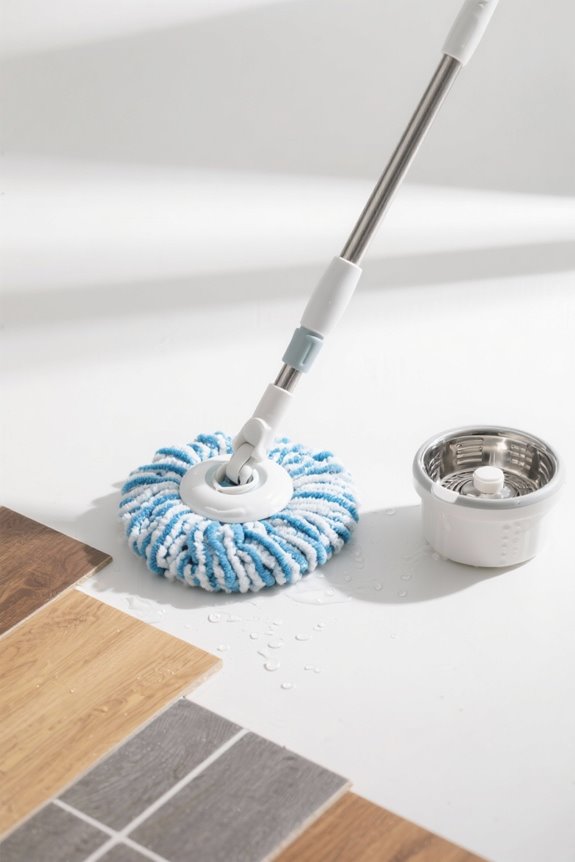
How To Use Spin Mops On Different Floor Types?

Using spin mops effectively on different floor types can be a breeze! For hardwood, wring the mop nearly dry and go with the wood grain. Tile needs a damp mop with a pH-neutral cleaner, working in small sections. Laminate floors? Keep it almost dry and use a laminate-specific cleaner to avoid damage. Remember to sweep first to prevent scratches. Curious about caring for your mop heads or cleaning frequency? Stick with us for more tips and tricks!
Key Takeaways
- For hardwood floors, wring the mop nearly dry and mop with the wood grain to avoid streaks and damage.
- When cleaning tile floors, use warm water with a pH-neutral cleaner and rinse post-mopping to remove leftover cleaner.
- Avoid excess water on laminate floors; use a slightly damp mop and follow the plank direction for a streak-free finish.
- Always vacuum or sweep before mopping to remove debris and prevent scratching, particularly on hard surfaces.
- Utilize eco-friendly cleaning solutions and maintain a regular cleaning schedule, especially for high-traffic areas like kitchens and bathrooms.
Understanding Spin Mops
You may be interested

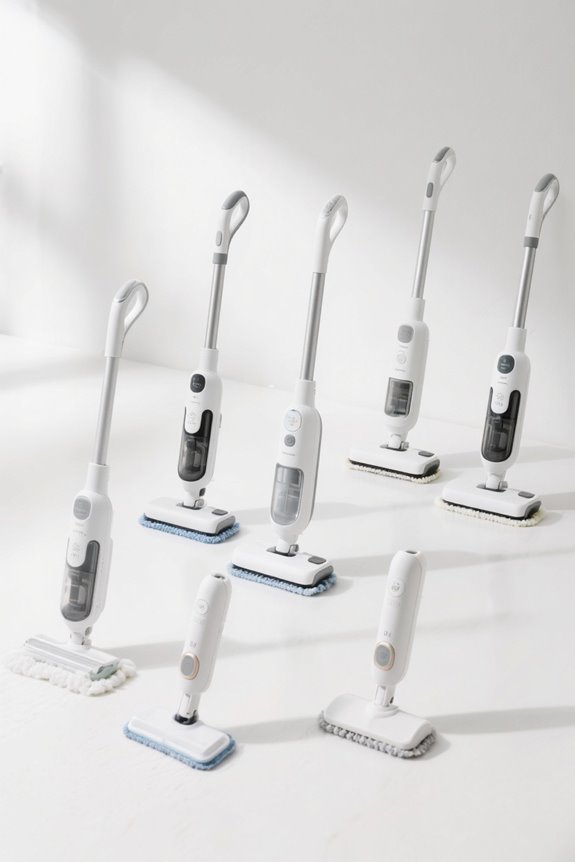
10 Best Flat Spin Mops for Effortless Cleaning in 2026
October 23, 2025
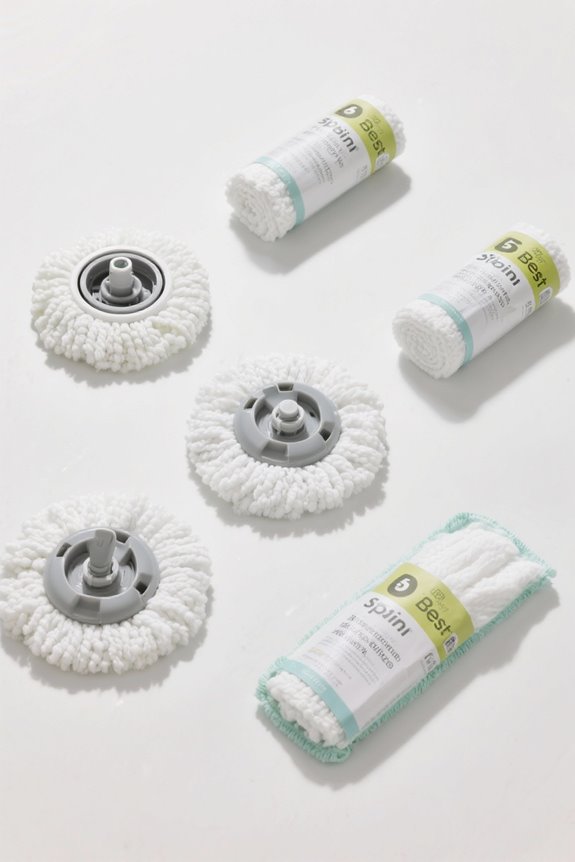
5 Best Spin Mop Refills of 2026 - Keep Your Floors Spotless
October 23, 2025
When it comes to cleaning our floors, spin mops can feel like magic wands. They boast a thoughtful spin mop design that simplifies our cleaning tasks. Comprised of a lightweight handle, a durable microfiber mop head, and an innovative bucket system, these mops allow us to tackle dirt efficiently.
Using centrifugal force, the mop head spins rapidly, flinging dirt and excess water into a separate reservoir. Cool, right? This design means we can manage rinsing cycles easily without the hassle of wringing out our mop by hand. Plus, those removable mop heads are machine washable! Many models also feature advanced design elements like splash guards to prevent water mess during use.
With some straightforward cleaning techniques and regular maintenance, our spin mops can become our trusty go-to for keeping our floors sparkling clean. Let’s enjoy that shine together!
Benefits of Using Spin Mops
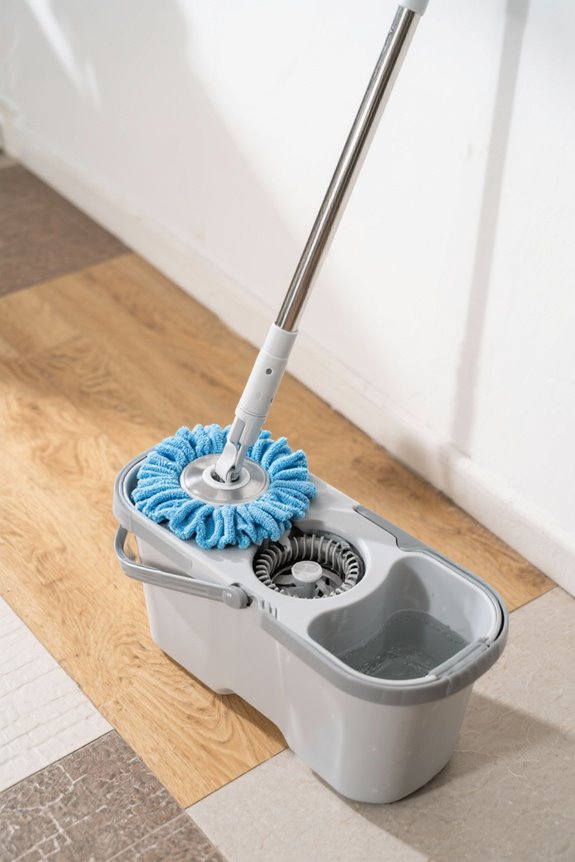
Using spin mops not only makes cleaning easier but also brings a host of benefits that can elevate our floor care routine. They are versatile, suitable for various floor types like hardwood, tile, and laminate. Plus, their ergonomic design helps us scrub without straining. With controlled moisture levels, we can tackle stubborn stains without damaging surfaces.
These mops also support eco-friendly cleaning, trapping over 99% of germs using just water. They’re lightweight and easy to maneuver, ensuring faster drying times, which helps prevent slip hazards. The built-in wringer keeps our hands clean, and the reusable mop heads save us money in the long run. Additionally, many models feature hands-free wringer options that enhance user convenience and reduce direct contact with dirt. Overall, spin mops make cleaning both efficient and enjoyable!
Preparing Your Spin Mop for Use

Preparing your spin mop for use is an easy yet important step to ascertain we get the most out of our cleaning routine. First, let’s check our components—handle, mop head, and buckets. We want to make sure everything’s there and fits together using proper mop assembly techniques. Next, we’ll attach the mop head to the handle securely and snap on a clean microfiber pad to avoid scratching floors.
Now, onto the fun part! We’ll fill the bucket with water, using appropriate cleaning solution ratios—don’t overdo it, folks! Remember, too much solution can leave residue behind. Finally, let’s place the mop head in the wringing basket, and get ready to tackle those floors! With our mop prepped, we’ll be one step closer to squeaky-clean surfaces. Additionally, ensuring that the mop head is made of machine-washable microfiber will enhance cleaning effectiveness and save costs over time.
Recommended Products

✔【Value Pack Mop head replacement】: You will get 4 pack mop heads replacements compatible with ocedar for your spin mop, which will last for one year use. The mop replace head for o cedar, not only saves you time and money, but also provides you with the convenience of cleaning.

40% IMPROVED CLEANING POWER: Compared to other ordinary mop heads, our mop head replacement improves its cleaning power by increasing the cleaning area by 40%; made of 100% microfiber, it absorbs water faster

Perfect Compatibility: This Mop Replace Head for Ocedar Easywring 1 Tank Spin Mop, Chenille Duster for Ocedar Mop Include 3 Pack Microfiber Chenille Mop Pad for Ocedar Spin Mop
Cleaning Hardwood Floors With a Spin Mop

A well-maintained hardwood floor can truly elevate the look of any home, and cleaning it properly is vital to preserve that beauty. When using a spin mop, we should employ effective cleaning techniques to guarantee our hardwood floors stay in top shape.
First, make sure to wring the mop nearly dry; excess water can cause serious damage. We need to mop quickly, following the wood grain to avoid any streaks. If we work in small sections, we can prevent the cleaning solution from drying unevenly.
And let’s not forget, using a pH-neutral cleaner is key for hardwood maintenance. Additionally, choosing a spin mop designed for multi-surface compatibility ensures that it will effectively clean without harming your floors. By following these steps, we can keep our floors looking fabulous without the risk of moisture damage!
Best Practices for Tile Floors
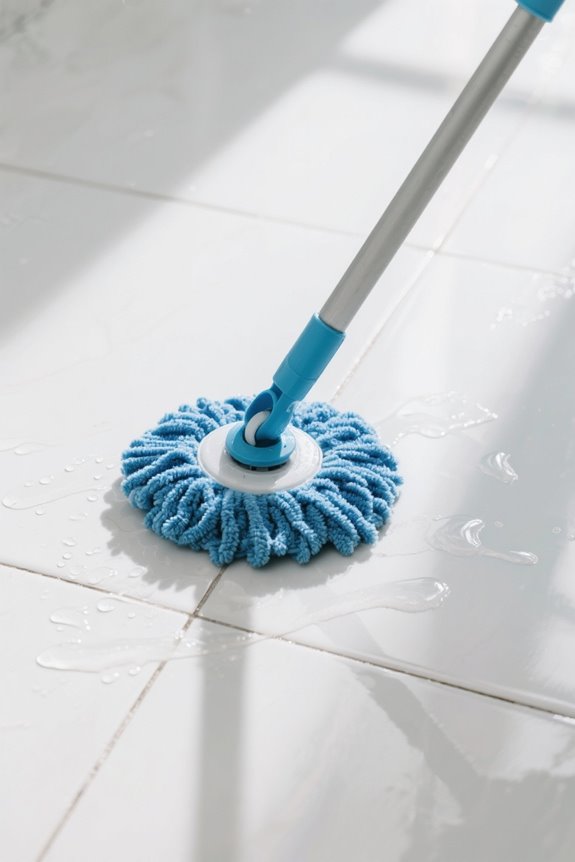
When it comes to maintaining tile floors, we often overlook some simple yet effective practices that can make a huge difference. First, we need to sweep or vacuum thoroughly to remove dirt that can scratch the tiles. Warm water mixed with a pH-neutral cleaner works best—just avoid harsh chemicals. Using our spin mop techniques, let’s pre-wet the mop, wringing out excess water to prevent pooling.
Let’s mop in small sections, following the tile pattern to lift dirt efficiently. It’s smart to rinse the floor after mopping to eliminate any leftover cleaner. To keep grout in check, we should clean mop heads regularly and change water often. Consistent tile floor maintenance leads to a sparkling finish! Additionally, using a mop with long-lasting batteries can ensure that you cover larger areas without interruptions.
Maintaining Laminate Floors
Maintaining laminate floors can feel tricky, but we’ve got this! One common mistake is allowing water to pool, which can lead to serious damage. Instead, we should always use a damp mop and dry spills immediately.
Here are some tips for damage prevention:
- Sweep or vacuum first to avoid scratches from debris.
- Mop in the direction of the planks to reduce streaks and guarantee an even clean.
- Use cleaners specifically for laminate, steering clear of soap and wax that can cause buildup.
When deep cleaning every few months, remember to use a nearly dry mop. Additionally, using eco-friendly washable microfiber pads can help promote savings and minimize waste while maintaining your floors. We want our floors looking great for years, so let’s sidestep these common pitfalls together!
Spin Mopping Vinyl Floors Effectively
Spin mopping vinyl floors effectively means combining the right tools with proper techniques. First, let’s choose spin mops with features like soft microfiber heads. These gentle fibers clean without scratching, making them perfect for vinyl floors maintenance.
Next, we recommend using warm water mixed with a mild dish soap. Harsh chemicals can damage the vinyl surface, so stick to safe options. When mopping, dip the mop in your solution, wring it out until damp, and use short strokes that follow the floor’s grain.
Remember to pre-clean by sweeping or vacuuming to remove loose debris. Working in small sections helps prevent the cleaning solution from drying too quickly. This way, we’ll keep our vinyl floors looking great! Additionally, utilizing chemical-free cleaning options can further ensure a safe environment for your family and pets while maintaining your floors.
Tips for Removing Pet Hair and Dander
Keeping our homes fresh and clean can be a challenge, especially when you have pets. Luckily, there are effective methods for pet hair trapping and dander reduction. For surfaces, using rubber gloves or an inflated balloon can help attract pet hair with static electricity. When tackling carpets, misting with water can clump the hair for easier removal.
Upholstered furniture is best cleaned with lint rollers or a damp cloth. Regular grooming of our pets can greatly reduce shedding—bonus points for avoiding hairballs on our favorite couch! And don’t forget to vacuum frequently with a HEPA-filter vacuum to capture dander. Additionally, lint rollers are essential for maintaining homes that are fur-free and fabulous, making them a must-have tool for pet owners.
Implementing these strategies will keep our homes cleaner and our furry friends happier!
Controlling Moisture Levels
When it comes to cleaning our hard floors, moisture control is vital for preserving their beauty and longevity. Different floor types require various levels of moisture detection. For wooden floors, we should use minimal moisture to prevent damage, while tile can tolerate more but needs drying to avoid slipping hazards.
Maintaining a consistent cleaning frequency helps too. We can adjust our spin mops to control water release, keeping it light on porous surfaces but moderate on smooth ones. Always monitor our floors visually, and don’t forget to follow the manufacturer’s recommendations. Additionally, using anti-slip surfaces can further enhance safety when cleaning various floor types.
Avoid over-saturation and guarantee that we dry our floors properly. After all, we want to keep our floors looking great without turning them into a slip-and-slide, right?
Choosing the Right Cleaning Solution
Choosing the right cleaning solution is a key step in keeping our floors looking their best. We’ve got to take into account cleaning solution compatibility with our specific floor types. For instance, castile soap works well on laminate floors, but it won’t add shine.
When selecting a solution, pH level matters too; we should aim for something close to neutral for safety. Eco-friendly options are popular, not just for the Earth but also for our families, especially pets and kids. Additionally, adjustable shower caddies can provide an organized space for cleaning supplies, ensuring that everything we need is within reach while maintaining cleanliness in our bathrooms.
Recommended Products

Maintains polish without stripping protective coating

Cleaning Power: Our No Rinse Neutral pH Floor Cleaner is formulated with a naturally derived surfactant system that effectively cleans all hard floors and other surfaces without the use of potentially harmful chemicals.
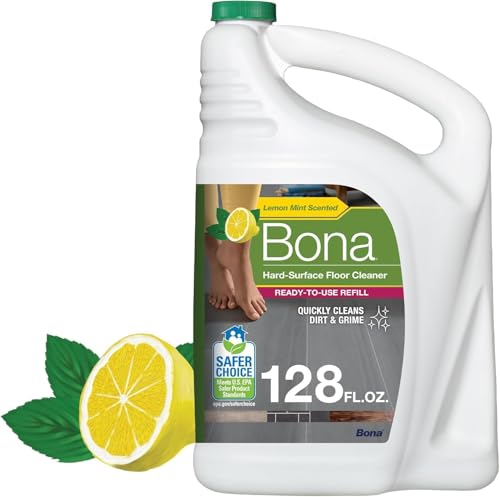
Easily refill any Bona floor cleaner spray bottle or mop cartridge
Utilizing a Dual Bucket System
Utilizing a dual bucket system can take our floor cleaning game to the next level. With clean water kept separate from dirty, we can enjoy some serious dual bucket advantages. This setup prevents cross-contamination, ensuring our mop stays efficient and ready to tackle more significant messes.
Imagine cleaning up to 3,000 square feet with just 5 gallons of water! That’s impressive, right? Plus, many dual bucket systems come with handy wringers, letting us control moisture without harsh workouts for our arms.
That means our microfiber mop heads work more effectively, pulling up over 99% of bacteria while prolonging their life. So, why not make the switch? Our floors deserve the best cleaning tools!
Recommended Products

CLEAN WITH CLEAN WATER: The O-Cedar RinseClean Spin Mop lets you clean your floors with clean water from start to finish. Never mop with dirty water again

HANDS-FREE WRINGING: Our exclusive mop bucket design features a built-in wringer that allows for hands-free wringing while Splash Guard keeps water splash and spray inside the bucket when wringing or when transporting the bucket from room to room

REMOVES OVER 99% OF BACTERIA W/ JUST WATER: O-Cedar's EasyWring Microfiber Spin Mop & Bucket Floor Cleaning System provides a deep-cleaning solution for all your at home needs by effectively removing dirt, grime and over 99% of bacteria with just water! It is safe on all hard floor surfaces, including finished hardwood, wood, laminate, tile, vinyl, and more.
Proper Care for Microfiber Mop Heads
Caring for our microfiber mop heads is essential, especially if we want them to last and perform effectively. To guarantee microfiber longevity, let’s follow some simple wash care tips.
- Washing: Use cold or lukewarm water, but warm for heavily soiled heads. A gentle cycle is best to avoid damaging fibers.
- Detergent: Choose a mild detergent, preferably “free and clear.” We should skip bleach unless it’s a tiny amount for sanitizing.
- Drying: Air drying is the way to go. Avoid the dryer and keep it out of direct sunlight to prevent fading.
- Storage: Hang mop heads to avoid compression and store them in well-ventilated areas.
Recommended Products

Compatible with Sweeper Mop: These reusable Mop pads fit the Sweeper Mop and all 10-12 inch flat mops, but are not compatible with the Sweeper XL

REMOVES OVER 99% OF BACTERIA W/ JUST WATER: O-Cedar's Microfiber Cloth Mop Refill provides a deep-cleaning solution for all your at home needs by effectively removing dirt, grime and over 99% of bacteria with just water!

【Compatibility】:Mop refills compatible with O-cedar Dual-Action Flip Mop,Not for Oceda Promist MAX Spray Mop,Please confirm your mop model before ordering.Material:microfiber and chenille.Size:19.68in X 5.7in.Package weights:1.2lb(4 pack)
Frequency of Cleaning With Spin Mops
Keeping our floors clean is an important part of maintaining a healthy home, and knowing how often to use our spin mops can make a big difference. We recommend mopping at least once a week to keep dirt from building up. If we’ve got kids, pets, or live in high-traffic areas, 2-3 times a week might be necessary. In places like kitchens or bathrooms, spills happen, so those areas should be cleaned more often. Remember, a simple cleaning schedule can help us stay organized. Spot clean when we see sticky spots, as they’re a sign that our floors need extra care. By adjusting for environmental impact, like weather or renovations, we can keep our mop routine efficient and effective!
Storage Solutions for Spin Mops
After we’ve established a cleaning routine with our spin mops, it’s time to think about where to store them. Creative storage solutions can keep our mops organized and accessible.
Wall-Mounted Holders: Use heavy-duty holders with rubber grips to prevent slipping. Install them at the right height to make retrieval easy.
Utility Cabinets: Store our mops in cabinets with adjustable shelves, which might even include racks for other cleaning tools.
Drying Stations: Designate a spot for drying mop heads. Slotted trays allow air to circulate, preventing mildew.
Portable Options: Consider mop buckets with compartments for easy transport and storage.
Recommended Products

BROOM AND MOP HOLDER: One package includes six adhesive strips and three Command Broom and Mop Grippers that each holds a broom or mop up to 4 pounds with a 0.8- to 1-inch diameter handle

BROOM AND MOP HOLDER: Each package includes adhesive strips and the white Command Broom and Mop Gripper. Each Gripper holds a broom or mop up to 4 pounds with a 0.8- to 1-inch diameter handle

Mess-free Organization: Maximize space in your garage, kitchen, laundry room, garden shed, or office with this wall mount broom holder, featuring 6 hooks and 5 slots to neatly store brooms, mops, rakes, shovels, and more.
Frequently Asked Questions
Can Spin Mops Be Used on Carpeted Floors?
No, we shouldn’t use spin mops on carpeted floors due to their limitations. Instead, let’s explore effective cleaning alternatives like vacuuming or using specialized carpet cleaners to maintain our carpets properly without risking damage.
How Often Should I Replace the Microfiber Mop Head?
When it comes to mop head maintenance, we shouldn’t cut corners. Generally, we should replace microfiber mop heads every 15-30 uses, depending on our cleaning frequency, to guarantee they’re always up to the task.
Are Spin Mops Suitable for Cleaning Windows?
Spin mops aren’t ideal for window cleaning; their efficiency falters on glass. We should consider using specialized tools like squeegees or microfiber cloths for clearer results and safer cleaning practices.
Can Spin Mops Be Used With Bleach or Harsh Chemicals?
We shouldn’t use bleach or harsh chemicals with spin mops due to bleach safety concerns. Instead, we can opt for effective chemical alternatives like hydrogen peroxide or eco-friendly cleaners that protect our mop and floors.
What Is the Best Way to Store a Spin Mop Long-Term?
Storing our spin mop’s like tucking a beloved book away: we should keep it in a cool, dry place, ensuring proper mop storage for long-term care, away from dampness and direct sunlight.


