As an Amazon Associate, we earn from qualifying purchases. Some links on this site are affiliate links at no extra cost to you. Our recommendations are based on thorough research and editorial judgment.

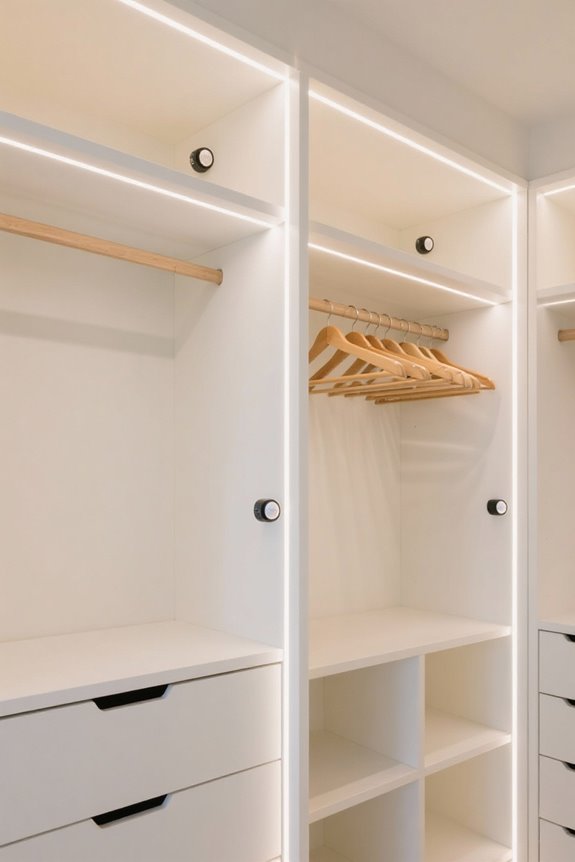
How To Add Lighting To Closet Systems?

To add lighting to closet systems, we should first assess the space’s size and lighting needs. That means measuring dimensions and looking for dark spots. Next, consider energy-efficient LED fixtures; they’ll save us money too! Options include ceiling-mounted lights or LED strips on shelves. Also, think about color temperature; warmer lights create a cozy vibe while brighter ones help us find clothes. Curious about specific installation techniques? There’s even more to explore!
Key Takeaways
- Measure the closet dimensions and perform a shadow test to identify areas needing additional lighting.
- Choose energy-efficient LED fixtures to provide sufficient lumens while keeping electricity costs low.
- Layer lighting types, such as ambient and task lights, for better visibility across different closet areas.
- Ensure proper electrical installation by adhering to safety codes and maintaining clearance around fixtures.
- Regularly inspect the fixtures and replace any faulty bulbs to maintain safe and effective lighting.
Assessing Closet Space and Lighting Needs
When we think about sprucing up our closet lighting, it all starts with understanding the space we have. First, we need to measure our closet dimensions—height, width, and depth—to guarantee we’re hitting all the lighting requirements. It’s surprising how many dark spots hide behind our clothes! Let’s perform a little shadow test; it’s easier than you think.
Next, we should evaluate the layout. Are there shelves or hanging clothes blocking the light? Depending on our ceiling height, we might opt for pendant lights if it’s tall or go for flush mounts if it’s cozy. Ultimately, thinking about how we organize our items will help us optimize our lighting, making everything more accessible and vibrant! Additionally, considering energy efficiency evaluations can ensure long-term savings on electricity bills.
Understanding Light Measurements and Requirements
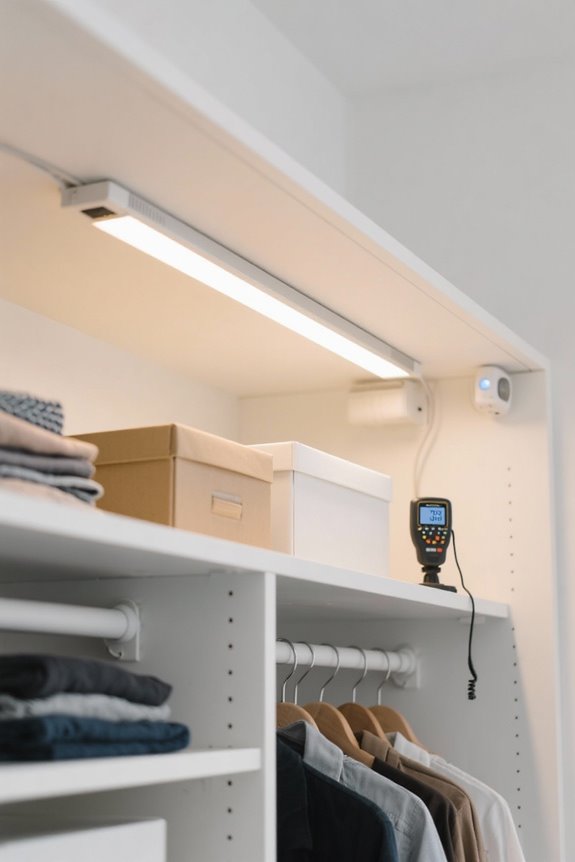
As we explore the world of closet lighting, it’s essential to get a grip on light measurements, especially lumens and color temperature.
Lumen calculations guide us in choosing the right brightness. Small closets generally need around 200-400 lumens, while larger spaces may require up to 1,000 lumens. For those seeking soft lighting, 400-800 lumens usually strikes the perfect balance.
Next, let’s talk color temperature. A cozy 2700-3000K is great, but 3000-4000K offers a clean, bright light perfect for finding your favorite shoes. Additionally, understanding the energy efficiency of LEDs is vital as they consume significantly less power than traditional bulbs, benefiting both your wallet and the environment.
Ultimately, selecting the right lighting not only enhances visibility but also transforms our closet into a welcoming space, making every outfit choice a delight! So, let’s shine on!
Identifying Electrical Infrastructure
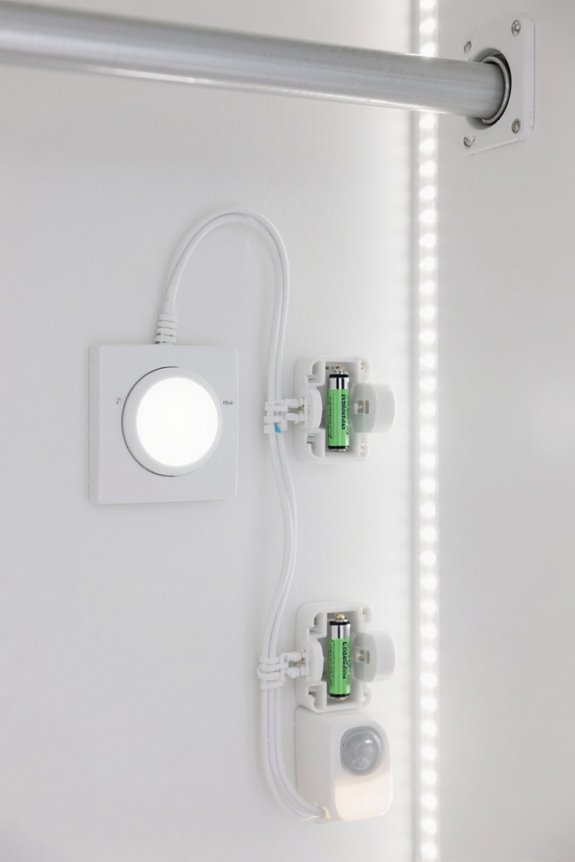
Identifying the electrical infrastructure in our closets is vital for effective lighting and overall functionality. We need to evaluate the electrical load and how it impacts our lighting choices. It’s imperative to guarantee our electrical systems comply with safety codes, especially when installing fixtures.
Let’s take a moment to reflect on closet size. Ideally, our closets should have a depth of at least 0.6 meters and clearances of 1.2 meters around electrical gear. This protects us and keeps everything functioning smoothly.
If we’re adding lighting in closets, remember that proper grounding is non-negotiable for safety. Additionally, ensuring that our lighting solutions are waterproof storage options can help protect against moisture damage. Finally, by avoiding double-duty uses for closet space, we maintain accessibility while making sure our lighting setup remains safe and effective. Let’s keep it simple and safe!
Choosing the Right Type of Light
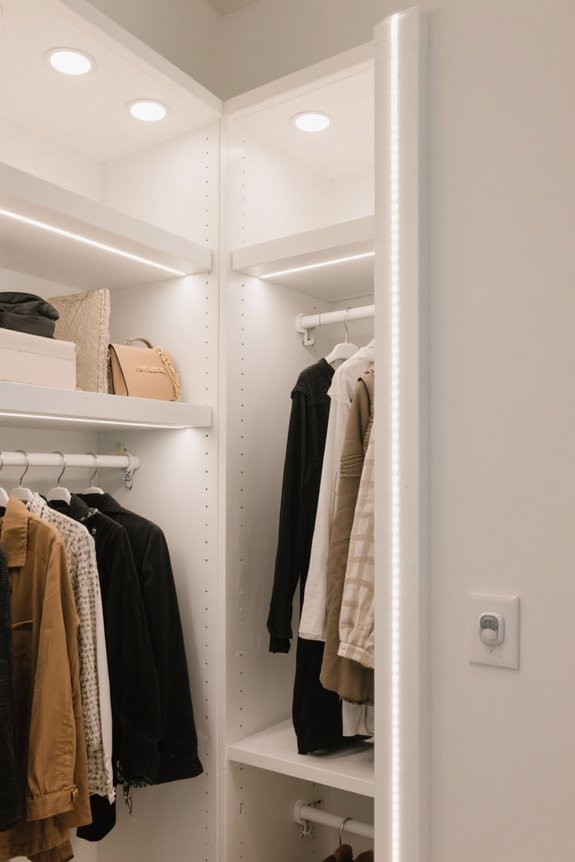
Understanding our electrical setup helps set the stage for choosing the right type of light for our closets. We’ve got some fantastic fixture trends to evaluate. For general illumination, ceiling-mounted fixtures work well in most spaces. If we want a sleek look, recessed lighting can be a fabulous choice for larger closets.
Now, let’s think about light layering. We can combine ambient, task, and accent lighting to create a functional and stylish environment. For example, LED strip lights can illuminate shelves, while wall sconces add flair. Don’t forget smart bulbs, which let us control brightness and colors, making our lighting truly customizable. Additionally, incorporating modular designs in our closet organizers can enhance the overall functionality and aesthetic appeal of our spaces. With proper selection and layering, our closets can become the well-lit and organized havens we’ve always wanted!
Considering Light Color Temperature and Glare
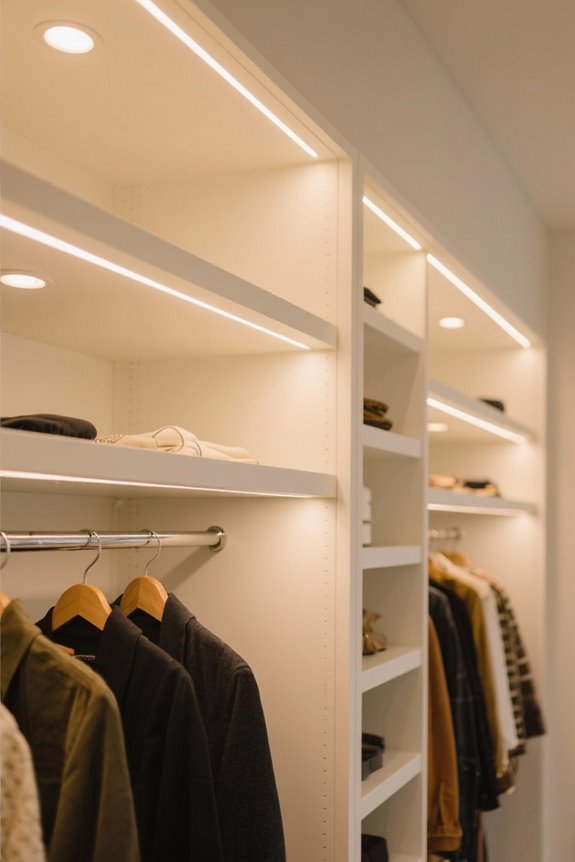
What’s the best way to choose the color temperature for our closet lighting? We should aim for a range between 3000K and 4000K. This keeps our space warm yet guarantees color consistency for our clothes. Warmer lights—2700K–3000K—make reds and yellows pop, perfect for cozy moments. In contrast, cooler temperatures—over 4000K—offer brighter lighting, ideal for detail-oriented tasks. To enhance visibility, consider using adjustable shelf dividers that can help organize clothing and accessories more effectively. To prevent glare, using fixtures like recessed lights or adjustable track lighting can help us manage light layering effectively. We can direct the light away from reflective surfaces and our eyes. Remember, testing bulb samples will save us from regrettable lighting choices. After all, nobody wants to dress in harsh lighting—yikes!
Preparing for the Installation Process
Before we immerse ourselves in installing lighting in our closets, it’s essential to evaluate our space properly. First, let’s measure the dimensions to decide where the best fixtures will go. Analyzing the layout helps us figure out which areas need the most light—especially those dark corners!
Next, we should consider fixture aesthetics—after all, style matters. We also need to stick to our lighting budget, so choosing energy-efficient options like LEDs is a smart move. Don’t forget to identify any obstructions, like hanging clothes, that might block light. Additionally, the installation requirements for your lighting fixtures should be compatible with your closet setup to ensure a smooth process.
Finally, gather our tools, double-check compatibility with existing wiring, and take photos for reference. With these steps, we’ll be ready to tackle the installation!
Safety Measures Before Starting the Installation
When we think about starting our lighting installation, it’s essential to prioritize safety first. One major step is turning off electricity at the circuit breaker. We wouldn’t want a shocking surprise, right? Let’s also use insulated tools to prevent any electrical shocks, and don’t forget to wear rubber-soled shoes.
It’s crucial to adhere to installation guidelines, such as ensuring that all fixtures are at the right distance from storage areas. For instance, surface-mounted lights should be at least 12 inches away from items in the closet. Additionally, ensuring that the durability and stability of the lighting fixtures are considered will contribute to a safer installation. Finally, remember to keep a first aid kit nearby, just in case of minor accidents. Following these safety precautions helps us create a well-lit, safe closet space without unnecessary risks.
Tools and Materials You Will Need
Getting started on our closet lighting project requires the right tools and materials, so we can guarantee everything runs smoothly. First, let’s talk about essential hand tools, including screwdrivers, wire strippers, and a reliable ladder for those tricky spots.
Now, we can’t forget about the materials! We’ll need 14-gauge indoor wire, junction boxes, and wire nuts for safe connections. Additionally, consider LED fixtures or strips for energy-efficient lighting. Using Tupperware organizers can also help keep your tools and materials organized and easily accessible during the project.
Pay attention to tool selection nuances—choosing the right screwdriver matters! Finally, keep material compatibility considerations in mind; using the wrong wire or fixture can lead to issues. With our supplies set, we’re one step closer to having well-lit closets! Ready to tackle the next phase?
Steps for Hardwired Fixture Installation
Now that we have our tools and materials ready, it’s time to tackle the steps for installing hardwired fixtures. First, we’ll choose our fixture types and confirm the best spot for ideal light placement. Next, we’ll make certain to turn off the power at the breaker panel to keep things safe.
Moving on, we’ll run our wiring, carefully mapping routes and using 14-gauge Romex for that job. After that, it’s time to install our electrical boxes and make secure connections, guaranteeing hot to hot, neutral to neutral, and ground to ground. Finally, we’ll restore power to test our installation methods and verify everything’s working. Adjustable shelving options can enhance the functionality of your closet system by ensuring that your lighting complements your organization needs. Nothing beats a well-lit closet, right? Happy lighting!
Installing LED Strip and Profile Systems
Installing LED strip and profile systems can really elevate the look and function of our closets. For effective LED strip installation, we first need to measure our closet surfaces accurately. This guarantees we buy the right length of LED strips. When choosing strips, we should consider brightness and color temperature—warmer tones can make our closets feel more inviting! Additionally, integrating lighting into our closets can enhance the overall ambiance of the space.
Next, let’s explore some mounting techniques. We can use aluminum channels to help with heat dissipation and aesthetics. Don’t forget to securely attach these with screws or strong double-sided tape. If we’re feeling adventurous, we might want to add dimmers for more control over brightness. Finally, before finalizing the installation, testing verifies everything works and shines perfectly. Happy illuminating!
Techniques for Light Placement and Distribution
When it comes to lighting our closet systems, employing the right techniques for placement and distribution can make all the difference. We can achieve even illumination by using vertical lighting on both sides of the closet. For focused spots, horizontal shelving lights work wonders, especially when we modify shelves for transparency. Flush mount lights offer diffuse light for smaller closets, while downlights highlight our favorite shoes or dresses.
Let’s not forget light layering! Combining ambient and task lighting creates a cozy atmosphere. Fixture versatility allows us to adjust track lighting or add chandeliers for luxury. By selecting the right light temperature—around 2700K—we can enjoy a warm glow that makes our closet feel inviting and functional.
Best Practices for Fixtures and Sensor Placement
Choosing the right fixtures and strategically placing sensors in our closet systems can truly elevate both functionality and style. When selecting fixture types, we should opt for LED surface-mounted or recessed lights, as they’re safe and energy-efficient. Plus, they’re compact—perfect for tight spaces!
For sensor technology, placing motion sensors near the entrance is essential. They can instantly light up our closets when we walk in, saving us the hassle of fumbling in the dark. It’s important to avoid any obstructions that might block their view. For larger closets, using multiple sensors helps guarantee uniform lighting.
Ensuring Safety and Maintenance
Guaranteeing safety and maintenance in our closet lighting is more than just a good idea—it’s crucial. We need to prioritize fire safety by using completely enclosed fixtures, as the National Electric Code requires. This means replacing any open or partially enclosed bulbs we might have. Remember those incandescent bulbs? They’re a fire risk!
We should also keep at least 6 inches clear around recessed fixtures and up to 12 inches for surface-mounted ones. Regular fixture maintenance is crucial, too. We can conduct inspections to guarantee everything’s up to standard, especially with older fixtures. Plus, let’s not forget to switch to LED lighting; it’s not only safer but also cuts down on maintenance.
Customizing Lighting for Different Closet Types
Customizing lighting for different closet types can make a world of difference in how we experience our space. For walk-in closets, we should consider recessed lighting combined with LED strips under shelves for layered illumination. Reach-in closets benefit from simple ceiling-mounted lights, keeping things clutter-free.
In built-in closets, LED strips inside compartments can help us find our favorite outfit quickly. Don’t forget smaller closets, where slim LED bars or motion sensors maximize utility optimization without taking up space. For specialty closets, like those for shoes, spotlights can really help make those prized collections shine! Each choice enhances our interior design while ensuring our closets are functional and inviting. What’s not to love about that?
Enhancing Closet Functionality With Automation
After exploring how to customize lighting for various closet types, let’s see how automation can elevate our closet experience even further. Imagine a closet that lights up automatically whenever we enter, thanks to smart sensors. This means no more fumbling around in the dark!
With automated brightness features, we can even set different brightness levels for various tasks—like selecting an outfit or finding that favorite tie. Plus, motion sensors guarantee lights turn off when we leave, saving energy and keeping our bills low.
Integrating our lighting system with smart home devices means we can control everything from afar, making our lives even easier. Who wouldn’t want a closet that literally lights up their day?
Frequently Asked Questions
Can I Use Battery-Powered Lights in My Closet?
Yes, we can use battery-powered lights in our closet! For installation, let’s consider battery options like LED puck lights. They’re easy to install and provide great illumination. Just remember to check batteries regularly for peak performance!
How Do I Determine the Right Brightness for My Closet?
To determine the right brightness for our closet, we should use a brightness measurement method. Lighting suggestions often recommend starting with 100-200 lumens per square foot and adjusting based on our needs and activities.
What Are the Benefits of Motion-Sensor Lighting?
We’ve found motion-sensor lighting’s really beneficial! It offers energy efficiency by reducing costs, plus that convenience factor—lights turn on automatically, making life easier and safer. It’s a smart choice for modern living.
Are There Specific Lights for Small Closets?
Yes, there are specific lights for small closets! We can use LED strips for flexible placements, or opt for recessed lighting to save space while providing bright, focused illumination that enhances the closet’s functionality and aesthetics.
How Can I Safely Access High Closet Fixtures?
Accessing high closet fixtures can feel like reaching for stars in the night sky. We must prioritize safety equipment and guarantee ladder stability, keeping three points of contact, to safely navigate those elevated spaces together.