As an Amazon Associate, we earn from qualifying purchases. Some links on this site are affiliate links at no extra cost to you. Our recommendations are based on thorough research and editorial judgment.


How To Design A Closet System For Maximum Space?

Designing a closet system for maximum space can be fun! First, let’s assess different closet types like walk-ins or reach-ins. From there, we can maximize vertical storage with tall shelves and over-the-door organizers. Next, we’ll choose shelves based on item needs. Using roll-out solutions helps keep everything accessible. Remember, maintaining organization is key! And if you’re curious about customizing for specific needs, there’s so much more we can explore together!
Key Takeaways
- Assess your lifestyle and categorize frequently used items to ensure easy access and optimal organization in the closet system.
- Implement vertical storage solutions, such as ceiling-high shelves and adjustable shelving, to maximize available space efficiently.
- Utilize door-mounted storage, hooks, and bins to enhance versatility while keeping the floor area clear for movement.
- Create defined zones within the closet based on usage frequency, placing daily essentials at waist level for quick accessibility.
- Maintain regular organization by decluttering and ensuring that all items are returned to their designated spaces promptly.
Understanding Different Closet Types
When we think about organizing our clothes and accessories, it’s essential to reflect on the different types of closet systems available. Walk-in closets have some great benefits. They provide ample space to store clothing, shoes, and accessories, plus they can be customized with shelves and sitting areas for that grand feel. On the other hand, reach-in closets offer unique features perfect for smaller spaces. Generally, they’re shallower and built into walls, making them an efficient option for hanging clothes and storing folded items. Both types can be tailored to our needs, whether we require more hanging space or clever shelving solutions. Additionally, selecting systems that maximize vertical and horizontal space can significantly enhance storage efficiency. So, which one suits your style? Let’s dive deeper!
Assessing Your Closet Space

Assessing Our Needs
We should consider our lifestyle evaluation to determine what clothes we wear most. For instance, daily wear should be easily accessible, while seasonal items can go a bit higher or deeper. Implementing drawer organizers can further enhance the organization of your closet by providing designated spaces for different clothing and accessories.
Decluttering Tactics
Are there accessibility challenges? Maybe we’re storing shoes in the oven (not ideal!). By categorizing our items and planning organization strategies, we can reveal hidden opportunities and enhance our closet experience. It’s time to transform our space!
Maximizing Vertical Storage
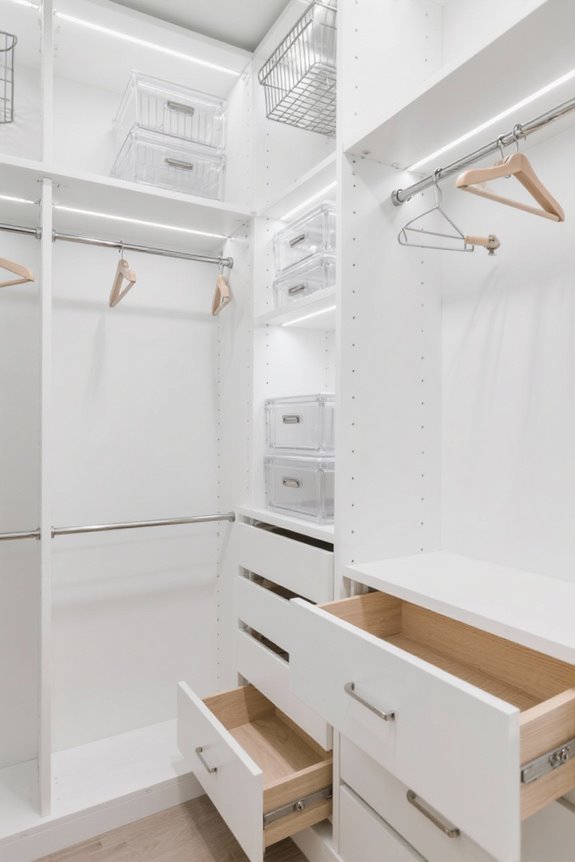
Maximizing vertical storage can truly revolutionize how we use our closet space. By utilizing over-the-door organizers, we can tap into areas often overlooked. They’re perfect for shoes, accessories, and even cleaning supplies. Let’s also think about installing floating shelves. These shelves give us a sleek, modern look while providing tiered vertical organizing that keeps our items accessible. Adding tall wardrobes and storage toppers can heighten our storage potential considerably. And don’t forget about hanging organizers! They help us keep clothing neat without crowding. Additionally, using adjustable shelving options can enhance flexibility in organizing seasonal or oversized items.
Choosing the Right Shelving Solutions

Choosing the right shelving solutions can make all the difference in creating an organized and functional closet. When selecting your shelving materials, consider adjustable systems. They let us customize shelf positioning to suit different items, maximizing space. For instance, we can use pull-out racks and baskets to make deeper closets more user-friendly.
Also, modular storage solutions are great since they can adapt as our needs change, fitting perfectly into our closet layout. Let’s not forget about durability; choosing high-quality materials guarantees our shelves hold up under pressure. Whether it’s shallow shelves for narrow closets or specialty units for shoes, every choice enhances accessibility. With the right shelving, we can transform our closets from chaos to calm! Additionally, investing in customizable layouts can further enhance the functionality of our closet systems.
Efficient Layout Design

When we think about organizing our closets, having the right shelving really sets the stage for an efficient layout design. First, let’s consider zone definition. We can divide our closet into sections based on how often we use items. For example, we should keep daily essentials at waist level, while seasonal clothes go up top. This creates an efficient flow, making it easier to grab what we need.
Next, don’t forget vertical space. Ceiling-high shelves can maximize our storage, keeping out-of-season items tucked away. With a well-planned layout, we’ll enjoy space flexibility, accommodating changing needs. Additionally, incorporating modular designs allows for personalization and adaptability in your closet system. Also, let’s think about door placement and standing space, ensuring easy access to everything. After all, a well-designed closet isn’t just functional; it should be enjoyable too!
Harnessing Lighting for Better Organization
Harnessing lighting for better organization can truly transform our closet experience. Proper illumination not only helps us see what we have, but it also enhances safety by eliminating dark spots. Imagine never fumbling around in a dim corner again!
Using motion sensor benefits, we can guarantee the lights come on when we enter, saving energy and hassle. Additionally, opting for energy-efficient lighting can significantly reduce electricity costs while enhancing the overall ambiance of the space.
Utilizing Door-Mounted Storage
Maximizing the use of space in our closets is a game-changer, and door-mounted storage is one smart way to do it. By utilizing door storage, we can save precious floor space while keeping our essentials easily accessible.
Benefits of Door-Mounted Storage
- Easy Access: Quick retrieval of hats or scarves without cluttering the floor.
- Versatile Designs: Choose from hooks, racks, or bins to fit our style.
- Rent-Friendly Options: Many are simple to install and remove, perfect for any living situation.
Just imagine transforming our door into a stylish organized hub! With options for everything from bags to accessories, space optimization has never been easier. Additionally, incorporating energy-efficient designs can enhance the functionality of our closet systems. Remember, a little creativity can reveal huge potential in our closets!
Incorporating Adjustable Components
Incorporating adjustable components into our closet systems can be a game-changer for organization and efficiency. With adjustable shelving, we can easily change shelf heights to fit bulky or delicate items. This flexibility allows us to avoid wasting space compared to fixed designs.
Moreover, modular design means we can mix and match shelves, drawers, and cubbies to meet our specific needs. Think about integrating pull-out baskets—perfect for grabbing what’s at the back without a wrestling match! Additionally, incorporating multi-compartment drawer organizers can further enhance our closet’s functionality by providing dedicated spaces for smaller items.
Adjustable systems truly shine in smaller spaces, maximizing every square inch. Plus, as our storage needs evolve, we can tweak our setups effortlessly. Wouldn’t it be great to adapt our closet to our changing styles? Let’s get started!
Selecting Appropriate Hanging Rod Heights
When we think about selecting the right hanging rod heights for our closet, it’s vital to contemplate both the types of clothes we own and how accessible we want them to be. For instance, if we hang shirts and blouses, a standard height of 66 inches works well. However, for pants or skirts, especially in a double-rod setup, we’ll want the lower rod around 40 inches.
Let’s not forget about special items, like long dresses or coats, which might need a rod height between 72 and 84 inches. By adjusting the hanging rod heights based on our clothing types, we ascertain everything fits perfectly and remains easy to reach. Additionally, considering the importance of eco-friendly storage bins can help us keep our closets organized and clutter-free. After all, who wants to battle a closet daily?
Leveraging Shelf Dimensions for Various Items
Leveraging shelf dimensions effectively can make a massive difference in our closet organization. First, we should consider shelf depths. For folded clothes, 14 inches usually works best, while flat shoe shelves thrive at 12 inches. Did you know that deeper shelves, around 16 inches, are perfect for bulky items like bins? Additionally, choosing high durability materials can significantly enhance the longevity and strength of your closet system.
Next, let’s talk about vertical spacing. For shoes, aim for 4.5 to 7 inches between shelves, while folded clothes need about 10 to 12 inches.
Finally, we can’t forget about shelf materials. Solid wood or plywood supports heavy items, while MDF is better for lighter loads. By mixing these dimensions and materials, we optimize our closet space and keep everything neat and accessible. Sounds like a plan, right?
Enhancing Accessibility With Roll-Out Solutions
After we’ve optimized our shelf dimensions, it’s time to think about how we can make our closet even more user-friendly with roll-out solutions. Roll-out rods are a game changer, especially for those of us with limited mobility. They let us access our clothes without bending or stretching, making an accessible design a priority.
Imagine a pull-down rod that brings that fancy dress right within reach! We can also add roll-out racks for ties and scarves, neatly pulling items forward so we can see everything. It’s all about reducing effort and enhancing convenience. By incorporating these features, we can create a closet that works for everyone. Who knew maximizing space could be this accessible and stylish?
Customizing for Specialty Closets
A well-designed closet can transform how we organize our lives, especially when it comes to specialty closets. These spaces can become chaos quickly, but we can create customized solutions to fit our needs perfectly.
- Types of Specialty Storage: Walk-in closets offer flexibility for larger collections, while reach-in closets maximize compact spaces. For apartments, wardrobe units provide adaptable options.
- Materials Matter: Think about using sustainable materials like bamboo or reclaimed wood for durability and style.
- Functional Features: Custom drawers and adjustable shelving help us organize small items like jewelry or sports gear efficiently.
Tips for Maintaining Organized Spaces
When it comes to maintaining organized spaces, sticking to a routine can make all the difference. We recommend setting up a regular maintenance schedule that includes cleaning routines. Start by decluttering monthly; this means removing clothing you haven’t worn in ages. By donating or selling these items, we create more space and reduce that overwhelming visual clutter.
Next, let’s utilize strategic storage solutions. Use bins and baskets to organize your items, keeping small things contained. Don’t forget to label everything. Finally, let’s commit to returning items to their designated spaces immediately. This simple habit helps avoid future clutter. We can make our closets functional and inviting by following these tips and staying on top of our organization game!
Frequently Asked Questions
How Do I Determine the Size of My Closet System?
To determine our closet system’s size, we should take accurate closet measurements, considering height, width, and depth. This will guide our space planning, ensuring we utilize every inch effectively and create a functional design.
What Materials Are Best for Closet Shelving?
Choosing closet materials is like selecting the perfect canvas. We love the warmth of solid wood for durability, but laminate options offer sleek, modern looks. Metal’s strength brings versatility, making each choice unique to our needs.
Can I Install a Closet System Myself?
Yes, we can install a DIY closet system ourselves! With some basic tools and accurate measurements, we’ll follow installation tips for a successful setup. Let’s make our space more organized and functional together!
How Do I Avoid Clutter in My Closet?
To avoid closet clutter, we must embrace decluttering strategies like regular inventory checks and mindful organization. By prioritizing closet organization, we create a harmonious space, reminiscent of a serene landscape rather than a chaotic maze.
What Are the Best Practices for Seasonal Closet Changes?
To effectively manage seasonal organization, we should implement closet rotation by swapping out seasonal clothes, using labeled bins for storage, and maintaining visibility. Regular assessments keep our closets functional and clutter-free throughout the year.